


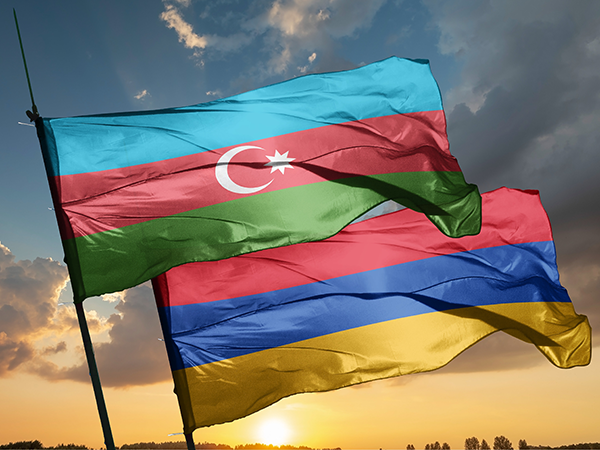
The peace process between Azerbaijan and Armenia is based on the mutual recognition of sovereignty and territorial integrity and the unconditional withdrawal of territorial claims. The position of the Armenian Apostolic Church, however, is moving in precisely the opposite direction, writes Fuad Abdullayev, Leading Adviser, Center of Analysis of International Relations and Multiculturalism.
-
Church bodies continue to use terms such as “Artsakh” and “the independence of Artsakh”, thereby supporting territorial claims to Azerbaijan’s internationally recognized territory.
-
In 2026, this position was promoted on international platforms through religious and ecclesiastical ties. This demonstrates that the Church is transferring the territorial issue from the sphere of interstate negotiations to the international religious and political arena.
Azerbaijan and Armenia have reached a stage at which the fundamental principle underpinning future peace has been defined with particular clarity. The agreement initialled on 8 August 2025 accounts for the mutual recognition of sovereignty and territorial integrity. Article II of the text states that the parties have no territorial claims against each other and will not advance any such claims in the future. Moreover, both parties undertake not to plan, encourage or support actions aimed at violating the territorial integrity or political unity of the other party.
The Armenian Apostolic Church, however, continues to operate within a different political paradigm. The issue is not the Church’s religious activities or its right to care for believers and cultural monuments. The problem arises when church bodies go beyond their pastoral role and begin engaging in what is essentially political diplomacy concerning issues of sovereignty, borders and the political future of a territory belonging to another state. This is precisely what is happening with regard to the internationally recognized territory of Azerbaijan.
Official statements by representatives of the Armenian Apostolic Church continue to use the terms “Republic of Artsakh” and “the independence of Artsakh”. This is not simply a matter of cultural or humanitarian rights, but a political project envisaging the existence of a separate entity within Azerbaijan’s internationally recognized borders. For example, in 2023, the Supreme Spiritual Council in Etchmiadzin explicitly linked the security of the Garabagh Armenians to the recognition of the independence of the so-called “Republic of Artsakh”, while rejecting recognition of Garabagh as part of Azerbaijan. This position was not revised even after the launch of the peace process in Washington.
On 2 September 2025, a religious service marking the “Independence Day of the Republic of Artsakh” was held at the Mother See of Holy Etchmiadzin, presided over by Catholicos Karekin II. Thus, a year after the initialling of an agreement based on recognition of Azerbaijan’s territorial integrity, the Mother See continued symbolically to affirm the existence of a separate “republic” on Azerbaijani territory.
An even more unequivocal statement came from the Catholicosate of the Great House of Cilicia. On 3 September 2026, Catholicos Aram I declared that “the independence of Artsakh is not only the past, but also the future”. He called for the memory of that independence to be transformed into an ongoing struggle for it, stressing that the issue must remain on the national agenda despite attempts by other parties to declare it closed in the name of political realism.
From the perspective of Azerbaijan’s territorial integrity, such a position is tantamount to territorial claims. Garabagh is internationally recognized as part of Azerbaijan. Consequently, any political programme aimed at creating or restoring a separate independent entity on this territory inevitably entails a change to Azerbaijan’s borders and sovereignty. This is precisely why such rhetoric directly contradicts the political logic of the peace process, even though the Church itself is not a party to the interstate agreement.
The second mechanism is the internationalization of this territorial agenda. It should be stressed that the concept of return promoted through international church platforms is not always limited to the humanitarian right of former residents to return to their homes. Developments in 2026 are particularly revealing in this respect. On 21 January 2026, the World Council of Churches launched a 336-page collection of proceedings from the May 2025 Bern conference, which had been organized at the request of the Mother See of Holy Etchmiadzin. In his address to that conference, reproduced on page 30 of the proceedings published in 2026, Aram I linked the return of the Garabagh Armenians under international protection to the restoration of their self-determination. Framing the issue in this way goes beyond the individual right of return. Combined with the Armenian Apostolic Church’s continuing statements about “the independence of Artsakh”, this effectively reproduces territorial claims from the standpoint of Azerbaijan’s territorial integrity. In other words, the church initiative has evolved into an instrument of international politics and advocacy aimed at a broader political audience. It is important to emphasize that the conference’s final statement also called on governments and international bodies to take diplomatic and legal steps, and on churches worldwide to continue advocacy in coordination with the Armenian Church.
The Vatican has become another important channel of engagement. On 18 May 2026, during a meeting with Pope Leo XIV, Aram I raised the Garabagh issue and called for the return of Armenians under international guarantees. Thus, the narrative of territorial claims was presented directly to the head of the Catholic Church and the diplomatic structures of the Holy See.
It should be noted that Etchmiadzin maintained the same position in September and October of this year. On 18 September, Karekin II discussed the rights of the Garabagh Armenians and claims against Azerbaijan with the international organization “Save Armenia”, and on 16 October he again emphasized the importance of raising these issues on international platforms.
Hence, the activities of the Armenian Apostolic Church reveal more than a series of isolated statements: they show a consistent pattern of promoting territorial claims against Azerbaijan. Positions formulated by church bodies are reframed through international interchurch networks in terms of human rights, freedom of religion, the right of return and the protection of cultural heritage, and are then promoted within international organizations and religious and diplomatic institutions.
As a result, this issue, which should be resolved within the peace process between Armenia and Azerbaijan on the basis of recognition of Azerbaijan’s sovereignty and territorial integrity, remains a part of the international political and public agenda. Notably, these activities are accompanied by the continued use of concepts such as “the independence of Artsakh” and the idea of a separate political future for Garabagh. Thus, humanitarian and religious rhetoric becomes, in practice, a tool for keeping the territorial issue concerning Azerbaijan alive on the international stage.
This is precisely where the risk for the entire South Caucasus lies. Keeping the Garabagh issue on the international political agenda, despite the steps taken by Baku and Yerevan towards mutual recognition of territorial integrity, complicates definitive post-conflict stabilization and creates conditions for the previous logic of confrontation to re-emerge in new ways. This is precisely why the Church’s activities may hinder the consolidation of peace. The Church has no legal authority to alter state borders and is not a participant in the negotiations between Baku and Yerevan. Nevertheless, by using international church networks to sustain the idea of a separate Garabagh, it preserves a political concept that the peace process should, in principle, have abandoned.
A paradox emerges: Azerbaijan and Armenia seek to resolve the territorial conflict at the interstate level, while church bodies continue to reproduce it at the symbolic, political and international levels. If we want peace to be durable, this contradiction cannot be ignored. If territorial integrity is to become the foundational principle of relations between Azerbaijan and Armenia, then long-term peace is incompatible with the maintenance of territorial claims against Azerbaijan, regardless of who advances them or in what form.


