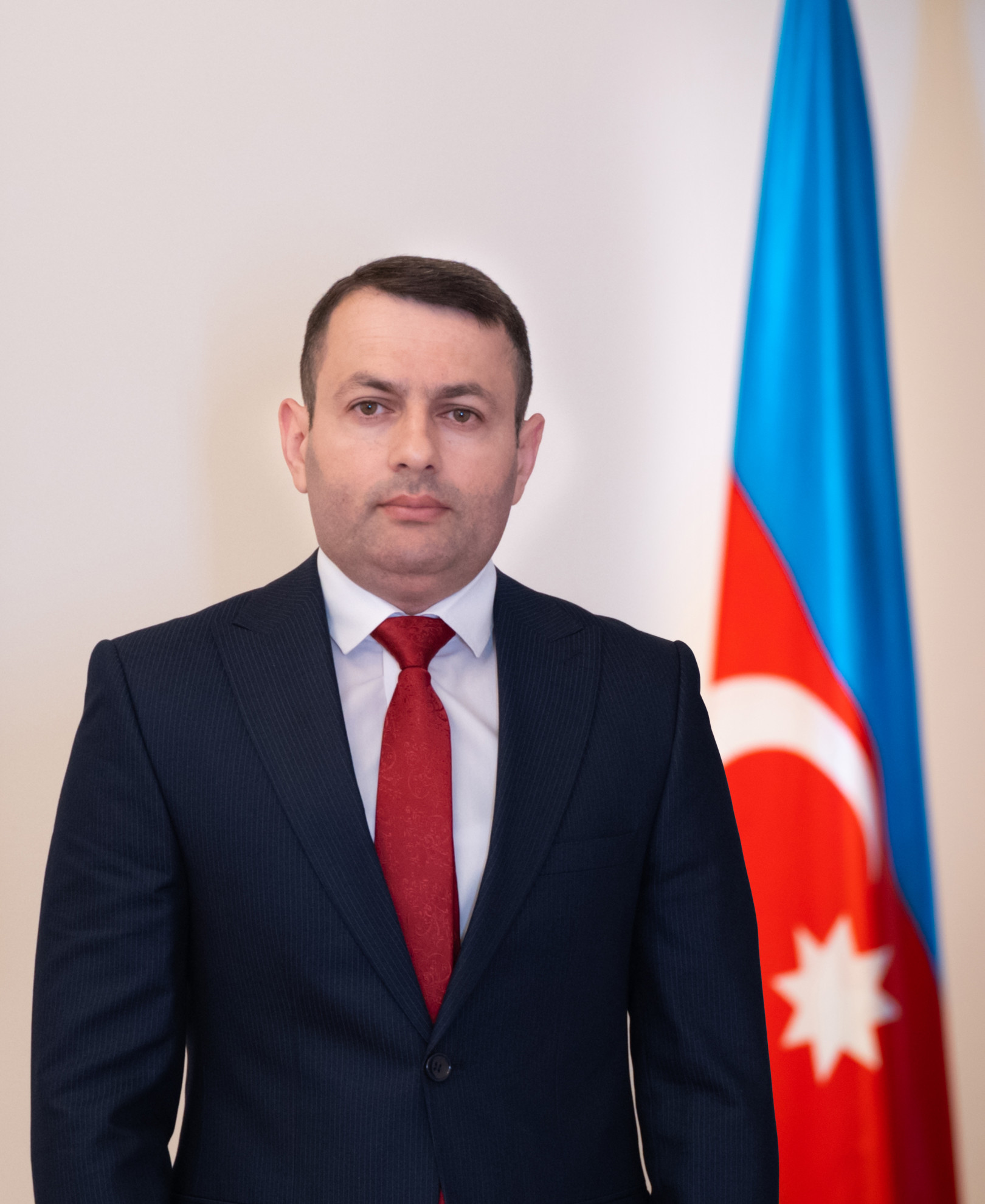
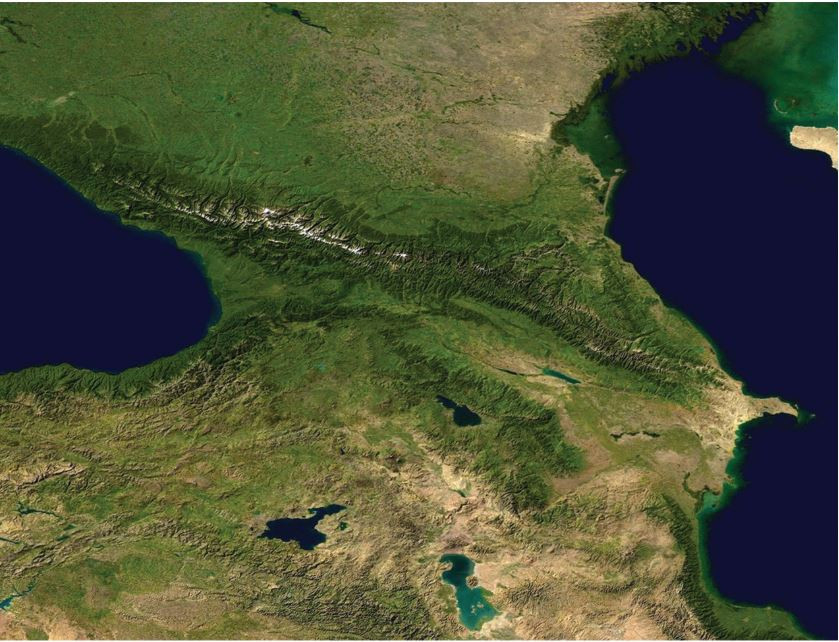
The South Caucasus has historically been an arena of complex geopolitical interaction, where the interests of regional and global actors intersect. Currently, the region is at a critical crossroads between a historic opportunity to establish long-term peace and the risk of returning to a protracted confrontation. Following the end of the decades-long armed conflict between Armenia and Azerbaijan, the governments of the two countries have taken a series of unprecedented steps toward normalizing relations, aimed at border delimitation, mutual recognition of territorial integrity, and the initialing of a comprehensive peace treaty. However, this fragile process faces serious resistance from influential non-state actors, primarily the radicalized circles of the Armenian diaspora and the Armenian Apostolic Church. These forces, possessing significant financial and informational resources, act as classic "spoilers" of the peace process. Their activities are aimed at undermining any peace initiatives and forcing a return to confrontation, writes Fuad Abdullayev, Adviser, Center of Analysis of International Relations.
A key change in the way radical forces operate has been a shift in the concepts that underpin their activities: blatant territorial claims are now carefully masked under the plausible pretext of human rights protection. Realizing that the international community no longer accepts the forcible alteration of the borders of sovereign states, the diaspora and the Church are actively exploiting the humanitarian agenda. They promote the concept of the "right to collective return" under international guarantees and the protection of "cultural heritage" as a tool to restore political and demographic control over the Garabagh region of Azerbaijan. A vivid example of this strategy is the activity of the church leaders. During high-level meetings, particularly with Pope Leo XIV in the Vatican, the Catholicos of the Great House of Cilicia, Aram I, openly lobbies for the return of Armenians to Garabagh under the auspices of international forces. Similarly, the Catholicos of All Armenians, Karekin II, regularly holds meetings with diaspora representatives, where issues of "spiritual support" and "protection of cultural heritage" are used to maintain political tension. In his public messages, for example, on the occasion of Victory Day or Army Day, Karekin II continues to use the terminology of "occupied territories" and calls for the protection of the rights of Armenians, praising soldiers who participated in wars, contributing to the further militarization of public consciousness.
Thus, universal human rights concepts are instrumentalized and turned into weapons with the aim of continuing the confrontation through hybrid methods. Humanitarian rhetoric becomes merely a convenient cover for an unwillingness to recognize a neighboring state's borders and a desire to maintain separatist tendencies for future geopolitical manipulations.
Undisguised revanchism and expansionist agenda
Despite the use of humanitarian camouflage, undisguised revanchism and blatant territorial claims frequently break through in the public discourse of these groups. Representatives of diaspora structures explicitly state that their political agenda is not limited to the internationally recognized borders of the modern Republic of Armenia. In public speeches, they openly list the sovereign territories of neighboring states as parts of their "historical homeland".
One revealing example is a statement by Maria Gabrielian, a member of the People's Assembly of Syria, who emphasizes that national "red lines" remain unchanged, and the homeland is considered to be not only Eastern Armenia but also the sovereign territories of Azerbaijan (Garabagh, Nakhchivan), Georgia (Javakhk), and Turkey (Western Armenia). Speaking in the same vein is Elizabeth Chouldjian, spokesperson for the Washington office of the Armenian National Committee of America (ANCA). She declared that the diaspora acts as a "sovereign shield of the global nation," and its agenda is measured by far more than the 29,743 square kilometers of the Republic of Armenia, extending to Jerusalem, Javakhk, and other territories. Members of the Dashnaktsutyun (ARF) party, such as Daron Der Khachadourian in London or Sevak Pelian in Canada, openly call for continuing the struggle for “Artsakh”, emphasizing that a “geographic loss” does not mean the closing of the deeper historical page.
Methods of radicalization
The methods of activity pursued by these groups are highly diverse and institutionalized. They encompass political pressure, diplomatic lobbying, massive information campaigns, and so-called "mobilization". One of the main tools is the holding of specialized international forums, such as the "Conference on the Military-Historical Mobilization of the Diaspora" held in Paris, and similar events in Cyprus.
At these venues, plans to oppose and counter the peace process are openly discussed, strategies for pressuring international organizations are developed, and resolutions on the "safe return" of the population are promoted. The Church, in turn, uses its extensive network of dioceses worldwide for political propaganda, providing an ideological justification for the rejection of peace. These coordinated actions are aimed at internationalizing the former conflict and keeping it on the international agenda, despite the attempts of regional players to leave the decades-long hostility in the past.
A key direction of the activities of the diaspora and the Church is the creation of a fabricated international legal framework. Through aggressive lobbying on international platforms and in the parliaments of foreign countries, the adoption of unilateral resolutions and declarative acts is achieved. The strategic calculation is built on a long-term perspective, in the hope that the geopolitical situation in the region will one day change in their favor. Paradoxically, the very states and international institutions that declare their commitment to peace in the South Caucasus at the diplomatic level, intentionally or unintentionally, assist these destructive forces. By providing a platform for such legal populism, they are effectively laying a "ticking time bomb" in the region, feeding the illusions of revanchists.
At the same time, authorities in Baku are closely monitoring and analyzing these developments. It should be emphasized that such documents are entirely devoid of legal validity when it comes to justifying territorial claims. It is important to note that this creates a legal paradox, as the states and international organizations promoting these acts officially and unequivocally recognize the territorial integrity of Azerbaijan within its internationally recognized borders. Consequently, the resolutions they adopt lack genuine force under international law and serve solely as instruments of political pressure, thereby pushing further away the prospects for a final and sustainable reconciliation in the region.
Unfortunately, certain representatives of the political establishment in Western countries, guided by domestic political considerations and influenced by the Armenian lobby and diaspora organizations, continue to support initiatives that objectively contribute to the preservation of tensions and the potential destabilization of the region. Such a position not only creates additional political risks and adversely affects the perception which international investors have of the region, but also contradicts the official policy of the European Union and the United States, both of which have repeatedly declared their commitment to achieving long-term peace in the South Caucasus and have devoted substantial political, diplomatic, and investment resources to supporting this process.
In this regard, it would be advisable for certain representatives of state institutions in Western countries to consistently adhere to the officially declared course aimed at achieving long-term peace and stability in the South Caucasus, while minimizing the influence of lobbying initiatives that may complicate the process of the final normalization of relations between the parties. Such an approach would fully correspond to the strategic interests of their respective countries in ensuring sustainable peace, strengthening regional security, and fostering a favorable investment climate, which is one of the key factors for the region’s long-term development.
Confrontation with the official leadership of Armenia
Particularly noteworthy is the fact that the current leadership of the Republic of Armenia, headed by Prime Minister Nikol Pashinyan, has also become a target of harsh attacks from the diaspora and the Church. The Armenian government, realizing the damaging nature of the confrontational course, has made a choice in favor of pragmatism and the recognition of international borders. In response to this, radical circles have launched an unprecedented campaign to discredit the authorities.
The Primate of the Tehran Armenian Diocese, Archbishop Sepuh Sargsyan, openly stated that Nikol Pashinyan "is wrong when he says that Artsakh is not Armenian land," emphasizing that the authorities are on a destructive path. Church leaders warn that Yerevan’s policy negatively affects relations with the diaspora and demand the preservation of the Church's independent political status. ARF Bureau member Hovsep Der Kevorkian stated that the diaspora will never accept the concession of historical rights in the name of an "uncertain and humiliating peace," directly accusing the Armenian authorities of intending to "abandon Artsakh".
Thus, the radical diaspora and the Church act not only against neighboring states but also against their own country, attempting to deprive the sovereign government of its monopoly on foreign policy.
Conclusion
In conclusion, it should be emphasized that the achievement of long-term and just peace in the South Caucasus calls for a deep understanding of the role of destructive non-state actors. The academic community and international institutions must clearly distinguish between genuine concern for human rights and territorial claims disguised as humanitarian efforts. As long as the radical Armenian diaspora and the politicized Church continue their destabilizing activities, openly opposing the peace initiatives of their own country's legitimate authorities and propagating expansionist ideas, the peace process will remain under constant threat. The isolation of these radical elements and support for a pragmatic state policy are the only ways toward a stable future for the entire region.