


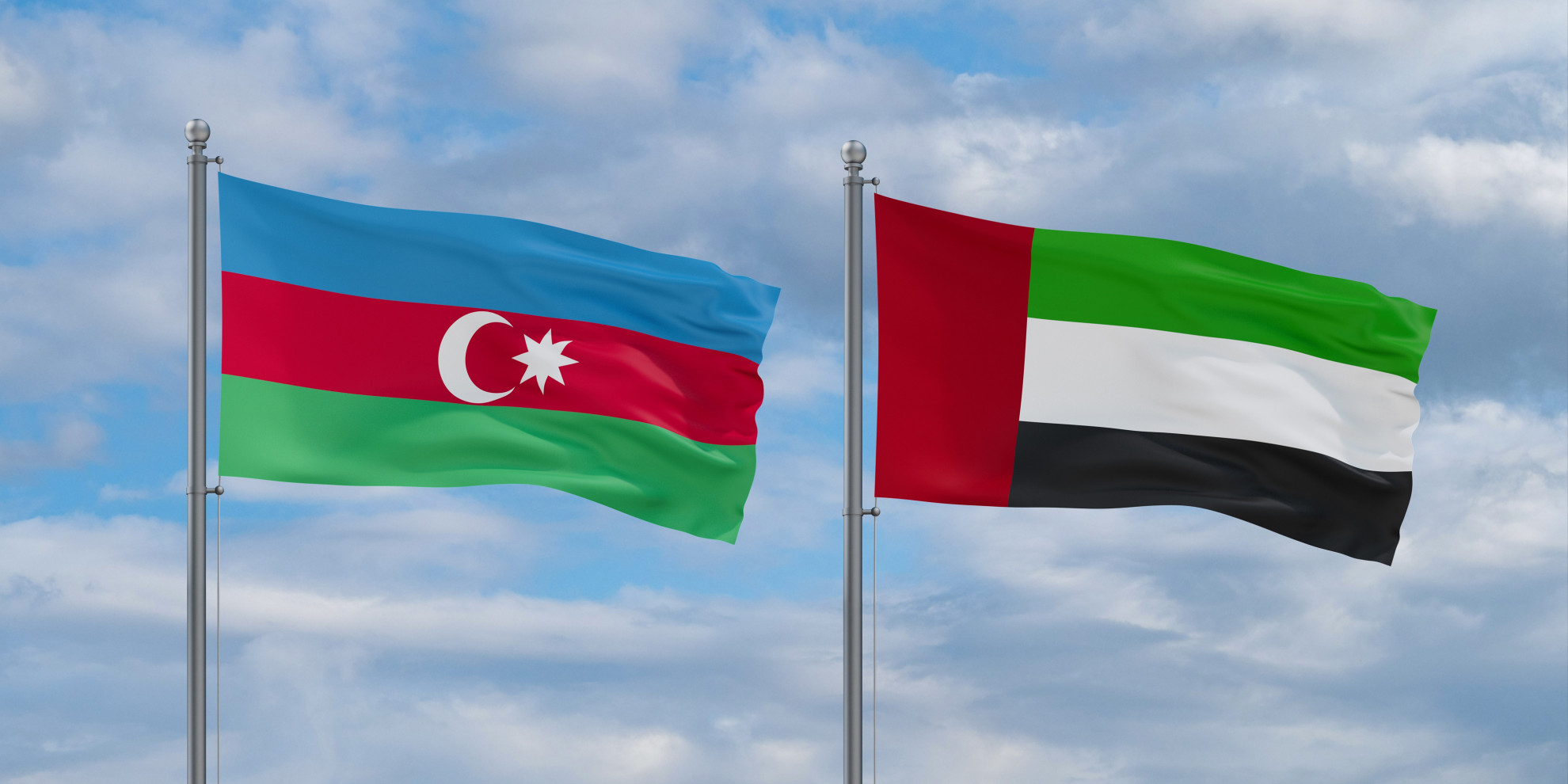
Since regaining independence in 1991, Azerbaijan has prioritized developing relations with the Islamic world. As the only Muslim-majority country in the South Caucasus, Azerbaijan operates in a complex geopolitical environment shaped by centuries of interaction among Islamic, Eastern, and Western civilizations. Its strategic geographic location, rich historical and cultural heritage, and experience in serving as a bridge between different civilizations have accordingly lent a multidimensional character to its foreign policy. Within this broader strategy, engagement with the Islamic world has emerged as an important dimension of Azerbaijan’s approach, reflecting not only religious and cultural affinities, but also political, economic, and geostrategic interests.
After independence, Azerbaijan placed particular emphasis on expanding political dialogue and economic ties with Muslim-majority countries, while also strengthening cooperation within international organizations. Within this broader foreign policy framework, relations between Azerbaijan and the United Arab Emirates have assumed particular importance. Following the UAE’s recognition of Azerbaijan’s independence on December 26, 1991, the two countries established diplomatic relations on September 1, 1992, thereby laying the foundation for the subsequent development of bilateral ties. Since then, relations between the two countries have been underpinned by mutual political support and cooperation in international forums.
However, the nature of Azerbaijan-UAE relations cannot be fully understood through the lens of political solidarity and diplomatic ties alone. In recent years, the bilateral relationship has developed a broader strategic agenda, evolving into a multidimensional framework for cooperation that encompasses investment, energy, renewable energy, transportation, logistics, tourism, food security, and other economic domains. The growing frequency of high-level exchanges and more robust political dialogue have also been important indicators of this shift.
Energy Cooperation
Energy cooperation between Azerbaijan and the UAE has emerged in recent years as one of the most dynamic and strategic dimensions of relations between the two countries. Alongside cooperation in conventional energy, the two countries have laid the foundations for a long-term partnership, particularly in renewable energy and the energy transition. Masdar, the Abu Dhabi Future Energy Company, one of the UAE’s leading clean energy companies, has been a key driver of this cooperation.
The year 2020 marked an important milestone in institutionalizing Azerbaijan-UAE cooperation on renewable energy, when Azerbaijan’s Ministry of Energy and Masdar signed an implementation agreement to develop pilot renewable energy projects.
The partnership gained further momentum following this agreement. In April 2021, an investment agreement, a power purchase agreement, and a grid connection agreement were signed for the development of a 230 MW solar power plant in Azerbaijan. In March 2022, the foundation stone was laid for the 230 MW Garadagh Solar Power Plant, which was inaugurated on October 26, 2023. The plant was developed with $262 million in foreign investment and represents Azerbaijan’s first utility-scale solar power project developed through foreign investment.
In October 2023, investment agreements were signed with Masdar to implement three new projects with a combined capacity of 1,000 MW: a 445 MW solar power plant in Bilasuvar, a 315 MW solar power plant in Neftchala, and a 240 MW wind power project in the Absheron-Garadagh area.
In November 2024, on the sidelines of COP29, financing agreements were signed for the Bilasuvar and Neftchala solar projects, with a combined capacity of 760 MW. The two projects are scheduled to become operational in 2027, with total investment amounting to $670 million.
Masdar therefore stands out as one of the leading international partners in Azerbaijan’s renewable energy sector. From the Garadagh Solar Power Plant, which is already operational, to the Bilasuvar and Neftchala solar projects and the Absheron-Garadagh wind project, which remain under development, this partnership has expanded into a broad portfolio of green energy projects. Given Azerbaijan’s goal of increasing the share of renewable energy sources in its total installed electricity generation capacity to at least 30% by 2030, cooperation with Masdar is helping mobilize international investment and boost the exchange of technological expertise as part of the country’s energy transition.
Expanding Tourism Ties
Tourism between Azerbaijan and the UAE has expanded significantly in recent years, driven by the easing of visa requirements and the expansion of direct flight connections. In 2015, Azerbaijan allowed UAE citizens to obtain a 30-day visa on arrival at its international airports. On July 8, 2023, a mutual visa exemption regime between the two countries entered into force. Citizens of both countries holding ordinary passports can currently enter and stay in the other country visa-free for up to 90 days.
Simplifying travel procedures has had a tangible impact on tourism flows between the two countries. The number of visitors from the UAE to Azerbaijan increased from just 821 in 2014 to more than 102,000 in 2017. Although tourist numbers declined sharply during the COVID-19 pandemic, the sector began to recover in subsequent years. In 2021, around 17,000 UAE citizens visited Azerbaijan, with that figure more than doubling in 2022.
The UAE remained one of Azerbaijan’s key tourism markets following the introduction of the visa-free regime. In 2024, 46,706 visitors from the UAE traveled to Azerbaijan, compared with approximately 43,834 in 2025. In a related development, the number of Azerbaijani tourists traveling to the UAE rose to 38,600 in 2025, representing growth of 7% compared with 2024.
Direct flight connections play a particularly important role in developing tourism ties between Azerbaijan and the UAE. Regular flights operated by Azerbaijan Airlines (AZAL), flydubai, and Air Arabia between Baku on the one hand and Dubai and Sharjah on the other have facilitated travel between the two countries. This simultaneous expansion of visa-free travel and direct air connectivity is establishing a stronger and more sustainable foundation for the continued development of Azerbaijan-UAE tourism ties.
Growing Trade Ties
Economic relations between Azerbaijan and the UAE have expanded rapidly in recent years, moving beyond trade and investment ties toward a broader framework of economic cooperation. The UAE is Azerbaijan’s largest trading partner in the Arab world. Bilateral non-oil trade reached $1.64 billion in 2023, rising to $2.24 billion in 2024. UAE investment also plays an important role in Azerbaijan’s economy, with its total value reaching $1.1 billion by the end of 2022.
Economic relations entered a new phase following the signing of the Comprehensive Economic Partnership Agreement (CEPA) on July 9, 2025, and its entry into force on April 15, 2026. In addition to eliminating or reducing tariffs on more than 95% of goods, the agreement establishes a more favorable framework for cooperation in services, investment, logistics, and digital trade. CEPA therefore represents a key mechanism for accelerating the transformation of Azerbaijan-UAE economic relations from cooperation centered primarily on trade toward broader and longer-term economic integration.
A Deepening Partnership
Over the past three decades, relations between Azerbaijan and the UAE have evolved from political and diplomatic ties into a multidimensional strategic partnership. Political trust-building and high-level dialogue have been accompanied by tangible cooperation projects in the economy, energy, investment, and tourism. In particular, the green energy projects being developed with Masdar, as well as the CEPA mentioned above, reflect efforts by both countries to strengthen the institutional and practical foundations of their bilateral relationship.
The meeting between Azerbaijani President Ilham Aliyev and His Highness Sheikh Mohamed bin Zayed Al Nahyan, President of the United Arab Emirates, on February 2, 2026, illustrated the expanding scope of the bilateral agenda. The discussions covered not only political and economic cooperation and collaboration in energy, culture, and humanitarian affairs, but also the development of defense ties, underscoring the partnership’s evolution beyond traditional areas of cooperation toward a broader and more strategic framework.
Looking ahead, it is clear that Azerbaijan and the UAE have considerable scope to further expand their cooperation across green energy, investment, transportation, logistics, the digital economy, and tourism. Moreover, Azerbaijan’s strategic location in the South Caucasus and Caspian regions, combined with the UAE’s capabilities and economic reach across the Gulf and the global economy, imbues their partnership with a broader regional significance that extends beyond the bilateral relationship itself.
https://www.interregional.com/article/Strategic-Partnership:/3451/En


