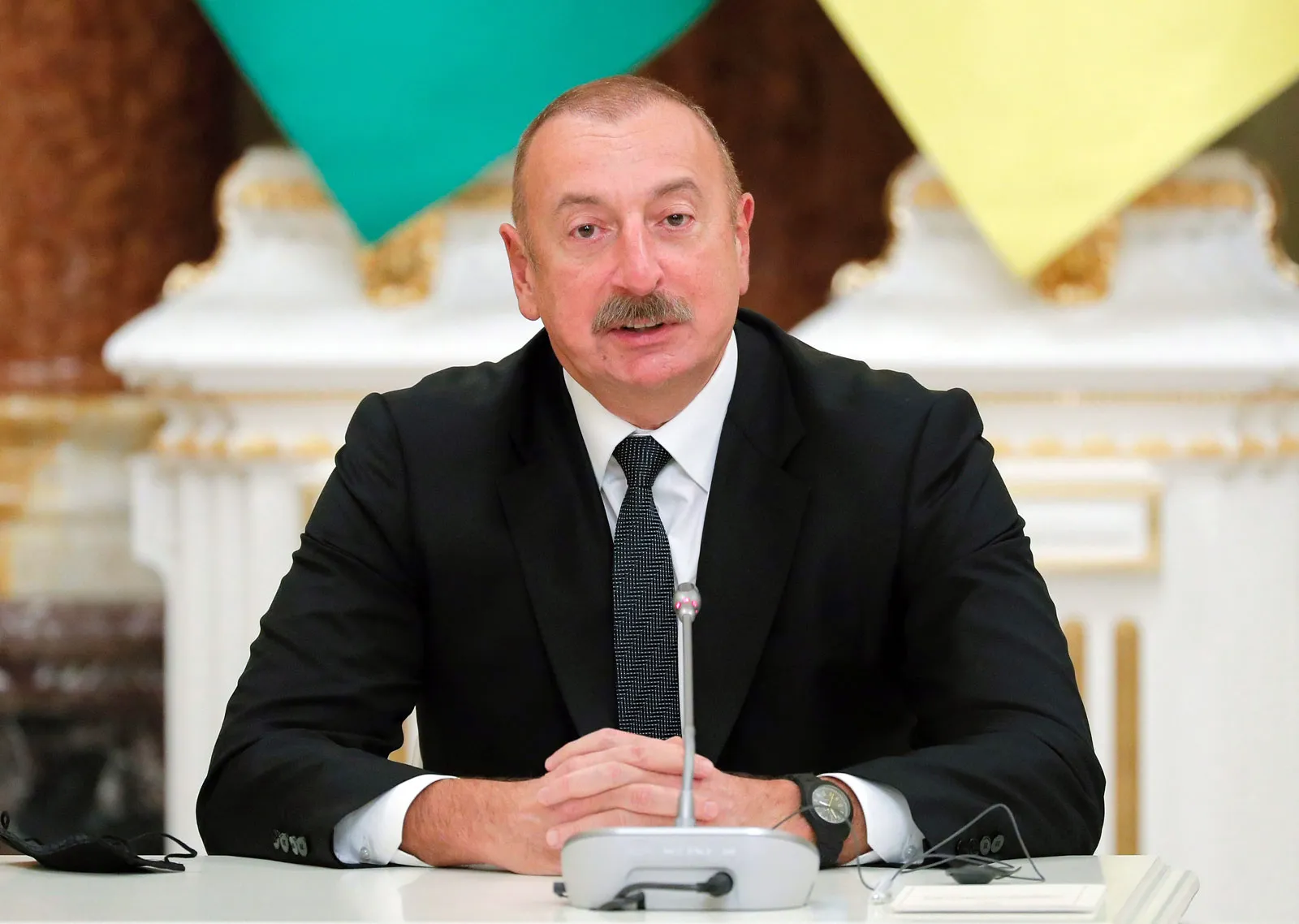
President Ilham Aliyev's (pictured) address to the Congress of the New Azerbaijan Party (YAP) was more than a party speech. It set out, in programmatic form, how Azerbaijan intends to protect its territorial integrity and sovereignty, that it won on the battlefield in 2020-2023. Its message can be summed up in three words - peace through strength, writes the Center of Analysis of International Relations and Multiculturalism.
The speech moved on two tracks at once. Looking back, it traced a line from the party's founding congress and Heydar Aliyev's return to power in 1993 to the restoration of the country's territorial integrity in 2023. Looking forward, it named the tasks ahead - security, ideological resilience, an independent foreign policy, economic and financial stability, energy and transport, social policy and the Great Return to Garabakh (relocation of refugees back to their homes).
Read together, these priorities describe a state that has ended one conflict but does not believe the age of danger is over. Azerbaijan wants peace and is negotiating for it. Yet it is building its security on the assumption that the world around it will stay volatile, and that the threats of tomorrow may come as much through ideas as through armies.
From victory to peace
Azerbaijan did not receive its territorial integrity as a gift. It restored it through a hard and costly fight, in three stages that the speech set out clearly: 1) the 44-day war, from 27 September to 10 November 2020, which ended in Armenia's defeat and capitulation; 2) three years of building the military and political ground for full sovereignty, from November 2020 to September 2023; 3) the anti-terror operation of 20 September 2023, which restored sovereignty over the whole territory and led to the withdrawal of all foreign armed forces.
The speech stressed that these victories came in a tense geopolitical setting. Armenia was backed by powerful states, including the co-chairs of the OSCE Minsk Group (France, Russia and the US), which for almost three decades had presided over a frozen conflict rather than its resolution. That backing did not save Armenia from defeat, nor did it stop Azerbaijan from reaching its goals. Baku now presents this outcome as a precedent of global importance: a mid-sized state enforced international law, and the four UN Security Council resolutions (adopted in 1993) on its territory, by its own means.
The President placed this achievement in a longer story. In his telling, the road to victory began in 1993, but the core of that national strategy has not changed since - independence, strong statehood, economic self-reliance and a capable army.
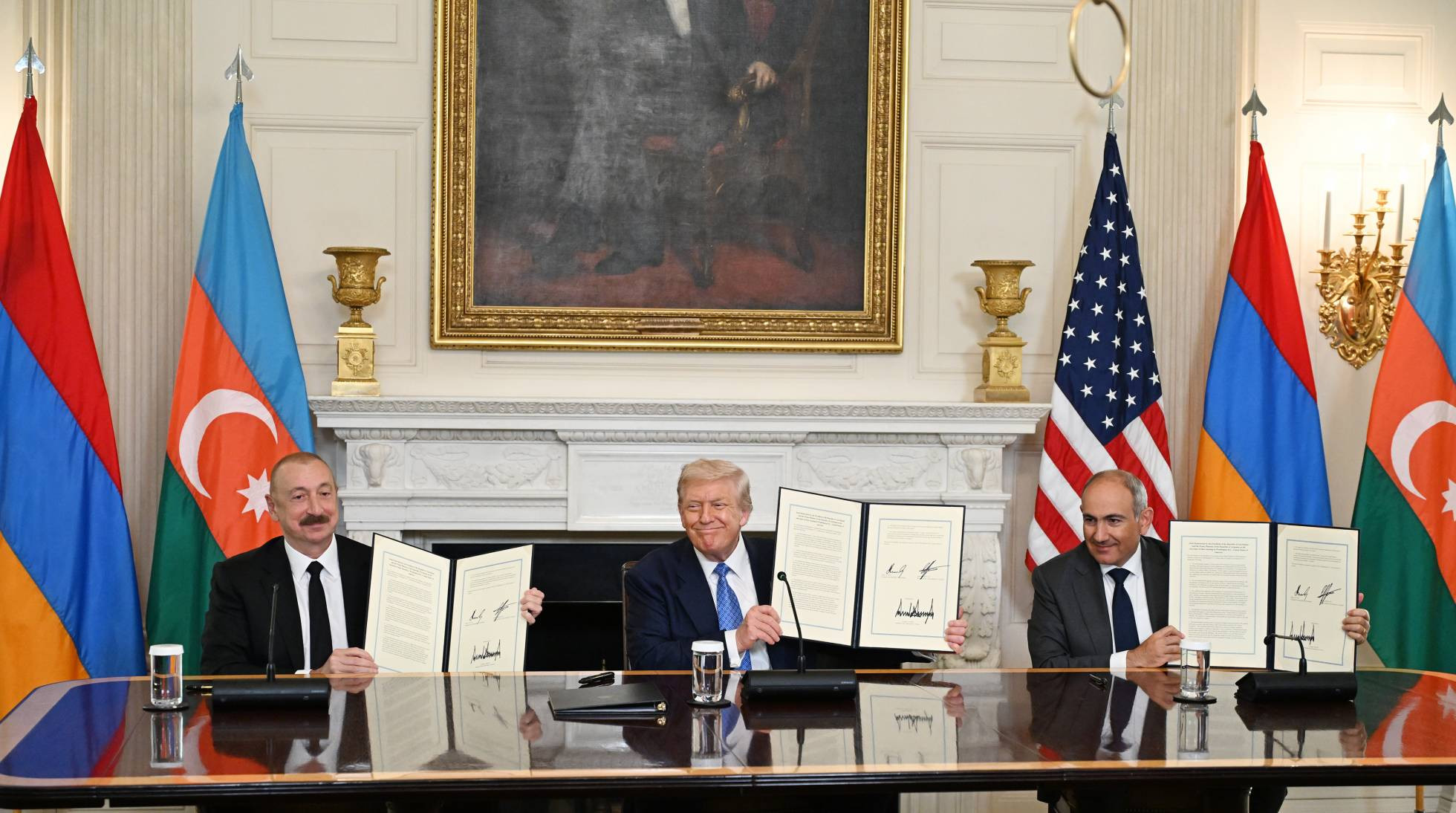
Having won, Azerbaijan now seeks peace. The peace agreement text initialed with Armenia in Washington in August 2025 opened a real chance to advance the sustainable peace in the years to come. But the lesson Baku draws from its own history is plain. Peace holds when the side that wants it is strong enough that no one is tempted to test it. As the speech put it, Azerbaijan must always be strong so that history does not repeat itself.
Security environment demands strong defence
The speech's security message starts from a sober reading of the world. Wars are being fought in Europe and the Middle East, great-power rivalry is sharpening, and the international rules that small states rely on are being openly ignored. The South Caucasus sits at the junction of these pressures. In such an environment, the risk of war cannot be dismissed simply because one conflict has ended.
Azerbaijan's answer is to keep building military power. Close to 9 billion manats (5,2 bln. USD) is planned for defense and security in next year's budget. This is not a sign of new ambitions against neighbours. It is an insurance policy for a country that has learned, at great cost, what weakness means: occupation, refugees and three decades of lost land.
The President also set out a doctrine of deterrence in unusually direct terms. Azerbaijan, he said, does not leave a single blow against it unanswered, so that everyone stays in their place and does not interfere in its affairs. Its purpose is to make aggression too costly to contemplate.
Two other pillars support this posture. The first is financial independence. Azerbaijan paid for everything it has, as the President noted, including every weapon, at world prices, down to the last bullet. External debt is about 5.6 percent of GDP, while currency reserves have reached roughly 90 billion dollars, more than 20 times that debt. A state that owes no one cannot easily be pressured.
The second is an independent, multi-vector foreign policy. Azerbaijan holds strategic partnerships with China and the United States and with ten European Union members, while keeping working ties with Russia and supporting Ukraine’s territorial integrity. It has led the Non-Aligned Movement in 2019-23, and now chairing the Conference on Interaction and Confidence Building Measures in Asia (CICA), while promoting the Organization of Turkic States. Baku is active in the Organization of Islamic Cooperation, and recently joined the Consultative Council of Central Asian states. Energy exports and the Middle corridor and other transit routes expected to add to the geoeconomic dimension, making Azerbaijan useful to many partners. As the speech noted, a country that pursues such a policy no longer needs the patronage that small states so often seek.
However, Azerbaijan faces also global economic challenges, and at the national level tries to overcome the dependence on hydrocarbon resources. This will be a test for years to come and Azerbaijan, in the presidential vision, should further diversify both economic and political options.
Guarding the secular state
The most forward-looking part of the speech concerned ideological security. In a world of the internet, cyberattacks and artificial intelligence, the President warned, ideological sabotage knows no borders. A state can defend its frontiers with soldiers, but the minds of its citizens are defended by other means.
One of the most persistent ideological threats to Azerbaijan is pressure on its secular model. Azerbaijan is a Muslim-majority country with a proud secular tradition. In 1918 it founded the first democratic republic in the Muslim East and gave women the vote before many European states did. Today Shia and Sunni Muslims, Orthodox Christians, Catholics and Jews live side by side without sectarian conflict. This is not an accident; it is the result of a state that keeps religion and government apart and treats faith as a private matter.
Political Islam rejects that model. Across the Middle East, movements that turned religion into a political programme have brought misery rather than salvation. Iraq, Syria, Yemen and Lebanon have seen states hollowed out, communities divided along sectarian lines and millions driven from their homes. Militias loyal to foreign patrons have replaced national institutions.
Azerbaijan has been a target of such interference. Foreign-backed networks have tried to spread radical religious ideas (for example, Huseyniyun), often through Azerbaijani-language media and online channels based abroad. The speech noted that networks working under the influence of various outside forces have been neutralized in recent years, and that today there are no domestic sources of risk or threat in Azerbaijan. It also called for reducing the influence of information resources formed outside the country, which some use as tools to interfere in Azerbaijan's internal affairs.
The speech's prescription is resilience rather than law-enforcement measures alone. Its first line of defense is education: an educated, knowledgeable society is far less likely to fall for lies and disinformation. Its second is patriotism. The 2020 war showed what Azerbaijanis can achieve when united around one idea. Traditional national values, including tolerance, respect for family and elders, attachment to the homeland and pride in a shared history, offer an identity that needs no imported ideology. Guarding the secular nature of the state is therefore not a hostile act toward religion. It is the condition that allows every faith in Azerbaijan to practice in peace.
In the meantime, Azerbaijan has not isolated itself from the global community, hosting various cultural, art and sport events, especially the so-called Western ones. The government still pays for education abroad, and seeks other avenues for humanitarian interactions. Critics argue about the deficiency in handling the protection of various rights, but rarely offer how to handle the situation in a specific geography, for instance, avoiding what happened with Beirut torn among all kind of influences and violent groups.
Conclusion
The common thread is that sovereignty and territorial integrity, once restored, has to be defended every day and on every front. Azerbaijan has paid too high a price for its land to take peace for granted. It offers its neighbours a settlement based on mutual recognition of borders. But it will negotiate from strength, protect its secular identity from those who would import the conflicts of other regions, and rely, above all, on itself.