Executive Summary:
-
The fifth meeting of the Organization of Turkic States (OTS) security council secretaries, held in Baku on September 17, reflected the organization’s expanding security role and Azerbaijan’s effort to position itself as a convening platform within the OTS.
-
Expanding trans-Caspian connectivity along the Middle Corridor is linking the OTS’s economic and security agendas. Uzbekistan and Kazakhstan have proposed new mechanisms to protect digital and critical infrastructure.
-
September meetings of OTS interior ministers and prosecutors’ generals point to more institutionalized cooperation centered on law enforcement, information exchange, and critical infrastructure protection.
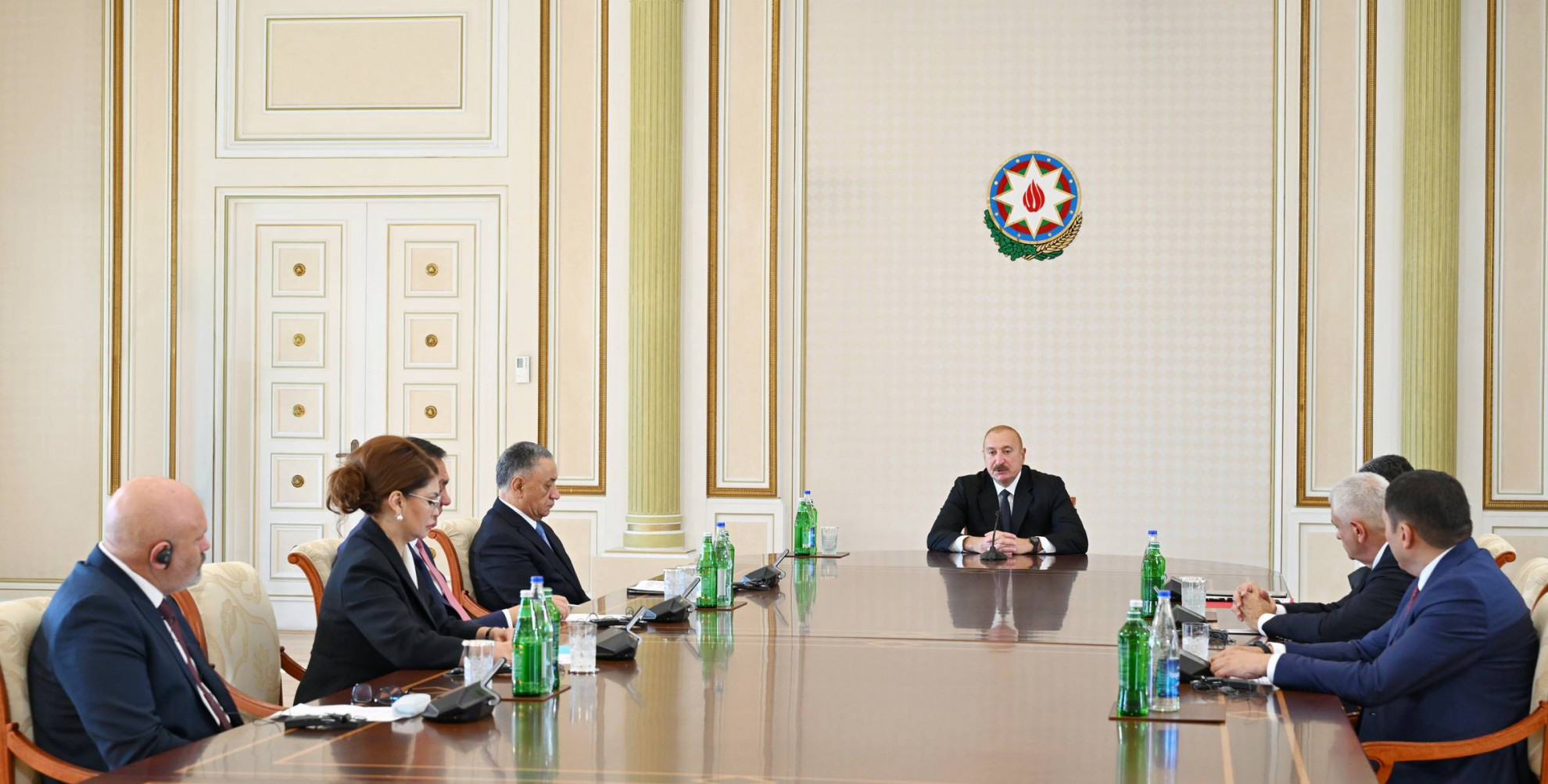
The Fifth Meeting of the Secretaries of the Security Councils of the Organization of Turkic States (OTS), held in Baku on September 17, provided the latest indication of the organization’s expanding security role (President of Azerbaijan, September 17). Held in Azerbaijan for the first time, the meeting highlighted the organization’s growing institutionalization of security cooperation. It focused on regional security, common threats, and mechanisms for joint responses (President of Azerbaijan, September 17). Against the backdrop of heightened geopolitical instability in the broader Eurasian region, the Baku meeting illustrated the links between security and the OTS’s expanding agenda in transport, energy, digital connectivity, and regional cooperation.
Azerbaijani President Ilham Aliyev placed this development within the broader process of cooperation across the Turkic world. In his address to the participants, Aliyev stated, “The integration process of the Turkic world is not limited merely to the political, economic, and cultural spheres, but also has a long-term strategic character” (President of Azerbaijan, September 17). Aliyev added that regular consultations among the security council secretaries are taking security dialogue within the OTS to an “entirely new level” and contributing to the development of a “common security architecture” (President of Azerbaijan, September 17).
The security meeting was part of a broader concentration of OTS-related activity in Baku. Days earlier, Azerbaijan hosted the Seventh Meeting of the Heads of Muslim Religious Administrations of the OTS member states, illustrating the expanding array of institutional and societal concerns that Turkic cooperation is addressing (OTS, September 14). The succession of high-level meetings also reflects Baku’s effort to position itself as a convening platform within the organization while encouraging more frequent interaction among OTS institutions beyond the annual summits of heads of state.
During the September 17 meeting, Aliyev called for more frequent political coordination within the OTS. He recalled that informal summits had been introduced at Azerbaijan’s initiative because “meeting once a year at the head-of-state level in this format was not enough,” with the first such summit held in Shusha in July 2024 under the theme “Building a Sustainable Future through Transport, Connectivity and Climate Action” (OTS, July 6, 2024; President of Azerbaijan, September 17). The summit also established the legal framework for the OTS e-Permit system, illustrating an effort to translate high-level political coordination into practical mechanisms for regional connectivity (OTS, July 8, 2024).
The OTS’s economic and security agendas are becoming more interconnected as trans-Caspian connectivity expands. The Middle Corridor’s expansion has increased the importance of energy networks, transport infrastructure, customs and digital systems, and other critical infrastructure along the route.
Azerbaijan occupies a pivotal position within this network as a trans-Caspian link connecting the Central Asian OTS states to Türkiye and European markets. During the September 17 meeting, Aliyev emphasized that “crucial energy and transport routes and corridors pass through our territories,” adding that the OTS is assuming a growing role in “connectivity, transport security, energy security, and security in general” (President of Azerbaijan, September 17).
This approach was also evident at the May 2026 OTS informal summit in Turkistan, held under the theme “Artificial Intelligence and Digital Development. Uzbek President Shavkat Mirziyoyev emphasized the “strategic role of the Middle Corridor” and noted the “full launch of the ‘E-permit’ electronic permit system between Uzbekistan and all member states of the Organization” (President of Uzbekistan, May 15). Mirziyoyev also called for the full digitalization of data exchange and proposed establishing a “Turkic Alliance for Cybersecurity and Digital Infrastructure Protection” (President of Uzbekistan, May 15). These initiatives complement the implementation of the OTS Action Plan for the electronic TIR (eTIR) customs transit procedure and the April 2026 memorandum on implementing the electronic CMR (e-CMR) consignment note across the OTS region (OTS, January 16, 2025, April 23).
At the same Turkistan summit, Kazakh President Kassym-Jomart Tokayev similarly underscored the connection between digital integration and security. Describing technological development as a factor of stability and security, Tokayev reiterated Kazakhstan’s proposal to establish an OTS Cybersecurity Council, which would “help identify vulnerabilities in the digital environment of our countries and prevent threats to infrastructure” (Akorda, May 15).
Cybersecurity is only one part of the OTS’s growing security agenda. On September 10, the OTS interior ministers held their third meeting in Astana (Kazakhstan Ministry of Internal Affairs, September 10). It was followed by the fifth meeting of the Council of Prosecutors General in Turkistan on September 11 and the fifth meeting of the secretaries of the security councils in Baku on September 17 (Kazakhstan Prosecutor General’s Office, September 11; President of Azerbaijan, September 17).
The scope of this cooperation is also becoming clearer. In his address to the Baku meeting, Aliyev identified international terrorism, transnational organized crime, illicit drug trafficking, religious extremism, hybrid threats, and the protection of critical infrastructure as challenges that “no single state can resolve alone” (President of Azerbaijan, September 17). The agendas of the preceding meetings point in the same direction. In Astana, the OTS interior ministers discussed transnational organized crime, extremism and terrorism, human trafficking, irregular migration, and information exchange between law enforcement agencies (Kazakhstan Ministry of Internal Affairs, September 10). In Turkistan, the meeting of prosecutors generals focused on drug trafficking in cyberspace, digital technologies, cryptocurrencies, online platforms, and joint investigations (Kazakhstan Prosecutor General’s Office, September 11).
The OTS is entering a new stage in which expanding connectivity is accompanied by more structured security cooperation. As transport corridors, energy networks, and digital systems bind the Turkic states more closely together, their protection is becoming a shared concern. The recent succession of specialized meetings and proposals for new cybersecurity mechanisms suggests that this cooperation is becoming more institutionalized. This evolution does not imply the OTS’s transformation into a military alliance or collective defense organization. Its emerging model remains centered on coordination, information exchange, law enforcement, cybersecurity, and critical infrastructure protection. Azerbaijan’s role as both a key transit state and a convening platform places Baku at the center of this process. At the same time, the broader trajectory suggests that security is becoming a more prominent component of the OTS agenda.
https://jamestown.org/ots-expands-agenda-from-connectivity-to-security/