The growing fragmentation of the global energy landscape has elevated energy security from a primarily economic concern to a central pillar of national security and foreign policy. Geopolitical tensions, armed conflicts, disruptions to global supply chains, and increasing competition over strategic resources have fundamentally reshaped the international energy environment, exposing the vulnerabilities of highly import-dependent economies. Recent instability in the Middle East has once again highlighted these risks. Tensions surrounding the Strait of Hormuz demonstrate how disruptions in a single passage can unsettle global energy markets and threaten the uninterrupted flow of crude oil. For countries such as South Korea, which imports nearly all of its crude oil and natural gas and relies heavily on supplies transiting the Strait of Hormuz, such disruptions pose significant economic and strategic challenges. These developments have reinforced Seoul’s determination to diversify both its energy suppliers and the transportation corridors through which energy reaches the Korean Peninsula. This strategic shift reflects a broader recognition that long-term energy security depends not only on access to sufficient energy resources but also on the resilience, flexibility, and geopolitical stability of the entire supply network.
Energy Security as a Strategic Imperative
For decades, South Korea has relied heavily on maritime energy imports from the Persian Gulf, with the Strait of Hormuz serving as the principal gateway for its crude oil supplies. While this model has provided a dependable source of energy during periods of regional stability, it has also left the country exposed to significant strategic risks. South Korea is among the most affected, with approximately 70–80% of its crude oil imports passing through the strait. Instability in the Strait of Hormuz has demonstrated how disruptions in a single maritime chokepoint can generate far-reaching economic and political consequences for energy-importing countries.
In response to these uncertainties, Seoul has intensified efforts to diversify both its sources of energy and the supply channels. Consequently, on June 30, 2026, speaking at the Emergency Economic Inspection Meeting, South Korean President Lee Jae-myung emphasized the need to strengthen country’s energy security by diversifying energy suppliers amid the continuing Middle East crisis.
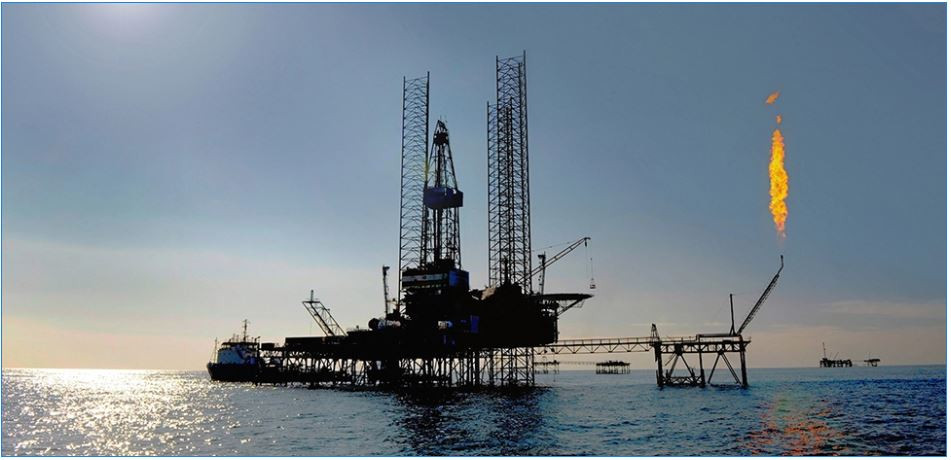
The Caspian Basin has long been regarded as one of the world’s most strategically important energy regions. Home to vast oil and natural gas reserves, Azerbaijan, Kazakhstan, and Turkmenistan play a vital role in global energy markets and have become increasingly important partners for countries seeking to diversify their energy supplies. South Korea’s engagement with the region began in the early 1990s following the dissolution of the Soviet Union. The emergence of newly independent states created new opportunities for Seoul to establish diplomatic ties while laying the foundation for long-term energy cooperation. By the early 2000s, South Korea had expanded its approach beyond importing hydrocarbons, pursuing direct investments in upstream oil and gas exploration and production projects across the wider Caspian region.
Expanding Energy Footprint in the Caspian Basin
A major step in South Korea’s energy cooperation with Azerbaijan came in April 2007, when the State Oil Company of the Azerbaijan Republic (SOCAR) and the Korea National Oil Corporation (KNOC) signed a memorandum of understanding to deepen bilateral energy cooperation. The agreement established a framework for joint participation in future oil and gas projects and marked the beginning of a more structured and institutionalized energy partnership between the two countries.
Later that year, in October 2007, KNOC agreed to acquire a 20% stake in the Inam offshore exploration project in Azerbaijan’s sector of the Caspian Sea from Shell’s existing 25% share. Before finalizing the deal, KNOC had also explored the possibility of acquiring a 20% stake directly from SOCAR, which held a 50% interest in the project. At the same time, South Korean officials engaged with both SOCAR and BP to identify broader opportunities for energy cooperation. These discussions underscored Azerbaijan’s growing strategic importance in Seoul’s long-term efforts to strengthen energy security.
Energy cooperation continued to deepen in August 2011, when SOCAR Trading and KNOC signed an agreement on crude oil storage at South Korean terminals. Under the arrangement, SOCAR Trading obtained the right to store up to 5.3 million barrels of crude oil in South Korea for an initial period of two years, with the option to extend the agreement for an additional year. Beyond its commercial value, the agreement reflected the growing level of trust and strategic coordination between the two countries, highlighting the broader evolution of their energy partnership.
More recently, in February 2026, SOCAR and Samsung E&A signed a memorandum of understanding to expand cooperation in energy infrastructure. The agreement covers a wide range of areas, including improving infrastructure efficiency, advancing technological cooperation, supporting local manufacturing, developing human capital, and promoting decarbonization initiatives. Beyond its immediate commercial objectives, the partnership reflects South Korea’s broader strategy of strengthening its presence in the Caspian energy sector while positioning its companies to play a larger role in Eurasia’s evolving energy landscape.
South Korea has also steadily expanded its energy investments in Kazakhstan. Major South Korean companies, including Samsung, SK Group, and KNOC, participated in the development of the Zhambyl offshore block in Kazakhstan’s sector of the Caspian Sea. This investment reflected Seoul’s broader strategy of moving beyond energy imports to secure direct stakes in overseas energy production. This approach was further reinforced in 2009, when South Korea acquired an 85% stake in Kazakhstan’s Sumbe Energy Company, the operator of the Arystan and Kulzhan oil fields. Seoul later increased its ownership to 100%, assuming full operational control and further strengthening its upstream presence in the country. Most recently, an intergovernmental agreement concluded in April 2026 committed South Korea to importing approximately 18 million barrels of crude oil from Kazakhstan. These sustained efforts demonstrate Seoul’s long-term commitment to deepening energy cooperation with Astana as part of a broader strategy to diversify energy sources and secure overseas production assets.
Connectivity and Future Prospects
Beyond bilateral energy cooperation, the Caspian region’s expanding connectivity agenda further enhances its strategic importance for South Korea. Major transportation initiatives such as the Middle Corridor (Trans-Caspian International Transport Route) and the CASCA+ corridor, emerging regional mechanisms such as the C6 platform, and the growing institutional role of the Organization of Turkic States are creating new avenues to deepen collective economic and energy partnership between Seoul and the Caspian littoral states. By improving transport connectivity, strengthening regional coordination, and fostering a more stable and predictable investment environment, these frameworks are increasing the region’s attractiveness as a long-term partner in South Korea’s energy diversification strategy.
Ostensibly, South Korea’s energy strategy is steadily shifting from one centered on a single region to a more diversified and resilient framework. As Seoul seeks to reduce its exposure to geopolitical risks and strengthen the security of its energy supply, the wider Caspian region is emerging as an increasingly important component of its long-term energy strategy. Given the region’s abundant energy resources, expanding transport connectivity, and growing geopolitical significance, the Caspian Basin is well positioned to become one of the key pillars of South Korea’s broader engagement with Eurasia in the years ahead.
https://www.geopoliticalmonitor.com/caspian-basin-rises-in-south-koreas-energy-security-outlook/