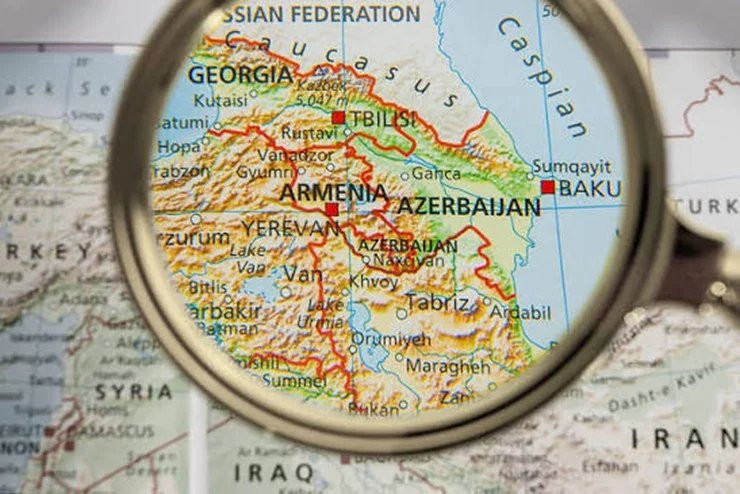
Any normalisation process between two states that involves leaving behind conflict, bloodshed and deadlock in favour of cooperation and interdependence requires patience, mutual understanding and maturity. Azerbaijan and Armenia are currently involved in such a process, with only a little more than a year having passed since the historic Washington Summit, unequivocally considered historic and transformational for the South Caucasus and relations between the two countries.
The summit saw not only the initialling of the draft peace treaty text by Azerbaijan and Armenia and the adoption of a Joint Declaration by Azerbaijan, Armenia and the United States, but also important developments in the bilateral agenda between all three countries. For Azerbaijan, a country that has experienced unjustified hostility from previous US administrations, most notably during the Biden presidency, the positive and forward-looking vision for the South Caucasus pursued by the Trump administration was received as a major positive development.
Since August 2025, considerable efforts have been directed at leaving the chapter of conflict behind, with a new era currently unfolding through incremental but important steps. As Azerbaijani President Ilham Aliyev said, the Washington Summit was historic primarily because it allowed the sides to move on from the conflict ‘politically’ and start building a climate of coexistence in the region. The military aspect of the conflict was decisively concluded by Azerbaijan, with the country restoring its territorial integrity and sovereignty after almost three decades of illegal occupation.
Nevertheless, despite being the victim of occupation in this case and emerging as the victorious side, Azerbaijan extended the hand of peace and offered to work together with Armenia in shaping a new regional environment. This includes, but is not limited to, initiating economic contacts, with Azerbaijan exporting goods worth $17.602 million to Armenia between January and August 2026, the establishment of contacts between civil society representatives through initiatives such as the Peace Bridge, and intergovernmental collaboration on extremely complex but vital issues such as border delimitation and demarcation.
Remaining obstacles
Progress is also evident in this particular relationship, occurring on an unprecedented scale. However, that being said, this is a situation that demands maximum caution, not least because the incremental steps taken so far are fragile and some remain incomplete. First, although the political relationship has advanced considerably, with the leaders of the countries recently reiterating their commitment to normalisation at a meeting on the sidelines of the 2026 SCO summit in Bishkek, significant hurdles remain to be overcome. Azerbaijan is extremely concerned about the presence of territorial claims against its sovereign territory in the Armenian Constitution, with its preamble containing references to the 1990 Declaration of Independence and the “reunification of the Armenian SSR and Nagorno-Karabakh”.
Azerbaijan’s leadership has repeatedly made it clear that the signing of any peace treaty in the future is strictly tied to the modification of the Armenian constitution and the removal of this claim. In addition to representing an obvious political message aimed at long-term peace, this step would deliver a decisive blow to factions of society and individuals who remain determined to reignite the former conflict lines.
In essence, this step is essential for ensuring that the peace Azerbaijan ultimately signs is with ‘Armenia’ rather than a specific government at a specific moment in time. Azerbaijan has proven that it remains firmly committed to this demand, which is entirely grounded in international law.
In addition to political and legal considerations, there is a major cultural and societal hurdle facing the normalisation process. As mentioned, Azerbaijan’s actions in accordance with international law have completely dismantled any basis for future conflict. With the liberated territories unanimously recognised by the international community as being under Azerbaijani sovereignty, the Azerbaijani state possesses complete control and responsibility over the land and what occurs on it. Therefore, attempts by certain forces in Armenia, but also in other countries, to use the issue of cultural heritage to discredit Azerbaijan and present distorted images of reality will only result in prolonged confrontation, deadlock and disagreement.
It is self-evident that the liberated territories are historical Azerbaijani lands, where clear evidence of the national cultural heritage of the Azerbaijani people, including the legacy of Caucasian Albania, exists. The destruction by the occupying forces of 65 out of a total of 67 mosques in the occupied territories, with the remaining two used for military objectives and for purposes of humiliation, demonstrates the invalidity of any attempt to portray Azerbaijan as the aggressor.
The recent visit to the liberated territories by a delegation of the diplomatic corps accredited in Azerbaijan brought to the forefront several unaddressed issues concerning the cultural dimension. For example, their visits to the Ganjasar and Khudavang churches, which are key symbols of the heritage of Caucasian Albania in Karabakh and form an integral part of Azerbaijan’s broader historical and cultural heritage, provoked strong reactions among certain politicians and experts in Armenia, including government representatives, as well as among the Armenian diaspora.
This reaction demonstrates their insistence, which has remained since the occupation period, on falsifying and denying the historical heritage of Azerbaijani lands. Here, the role of the government deserves specific attention. Although the Armenian government officially continues to recognise Azerbaijan’s territorial integrity and advocates further normalisation, its inability to prevent, once and for all, the use of cultural heritage as an ‘attack tool’ against Azerbaijan, its territorial integrity, and its cultural and historical heritage remains clear. As a result, this ‘indifference’ by the Armenian government facilitates and emboldens international media coverage directed against Azerbaijan.
Another issue that receives similar coverage concerns the individuals detained in Azerbaijan for separatist activity on the country’s sovereign territory. The tacit toleration of such false narratives by any government results in their facilitation and, consequently, implies one’s intellectual complicity with their very substance.
Going forward, if the chapter of confrontation is to close, this is an issue that the Armenian government must treat considerably more seriously and in line with the spirit of normalisation.
This reality continues to act as a major obstacle to the full normalisation of relations. It appears that a coordinated campaign is underway to revitalise former conflict lines and generate further division. The role of various articles published across different international media channels cannot be underplayed. These continue to present one-sided illustrations of the trajectory and history of the former Azerbaijan-Armenia conflict, but also disregard the suffering endured by Azerbaijanis throughout the past three decades. Instead, Armenia is presented as the victim, completely overshadowing the experiences of both the Azerbaijanis displaced from their territories and the devastation suffered by Azerbaijani territory.
Predictably, the articles completely overlook the systemic policy of destruction inflicted on Azerbaijani territories, including the planting of over 1.5 million landmines across the occupied territories. Hence, and as recently recapped by President Ilham Aliyev, although Azerbaijan is keen to work with Armenia towards normalisation and eventual lasting peace, the scars of what was experienced cannot simply be forgotten.
In fact, the President noted that the multiple experiences of tragedy, devastation and loss of life will help Azerbaijan act in a more alert way in its foreign policy endeavours. The experience of the past and the realisation of the delicateness of the present will fuel Azerbaijan to be even more decisive in protecting its national security.
The importance of external actors
The broader regional environment surrounding Azerbaijan also does not leave the country with room for calm or complacency. With war both to the north and south, and a complex normalisation process with Yerevan still ongoing, Azerbaijan is determined to continue protecting and implementing its national interests by any means necessary.
However, as with any region undergoing transformation, the input of external actors also carries weight and can make a positive difference. Here, the potential role of European policymakers requires special consideration. With the Trump administration already consolidating its contribution not only via the Trump Route for International Peace and Prosperity (TRIPP), but also through its engagement in the political coordination of the Washington Agreements, other actors must now step up to the challenge and support Azerbaijan and Armenia on the path to peace. Above all, European politicians must ensure that their rhetoric and the rhetoric of their institutions serve peace and peace only.
The chapter of confrontation in the South Caucasus has been put behind us, and reinvigorating former narratives will only delay normalisation and fuel existing revanchist sentiments targeting Azerbaijan and the country’s territorial integrity.
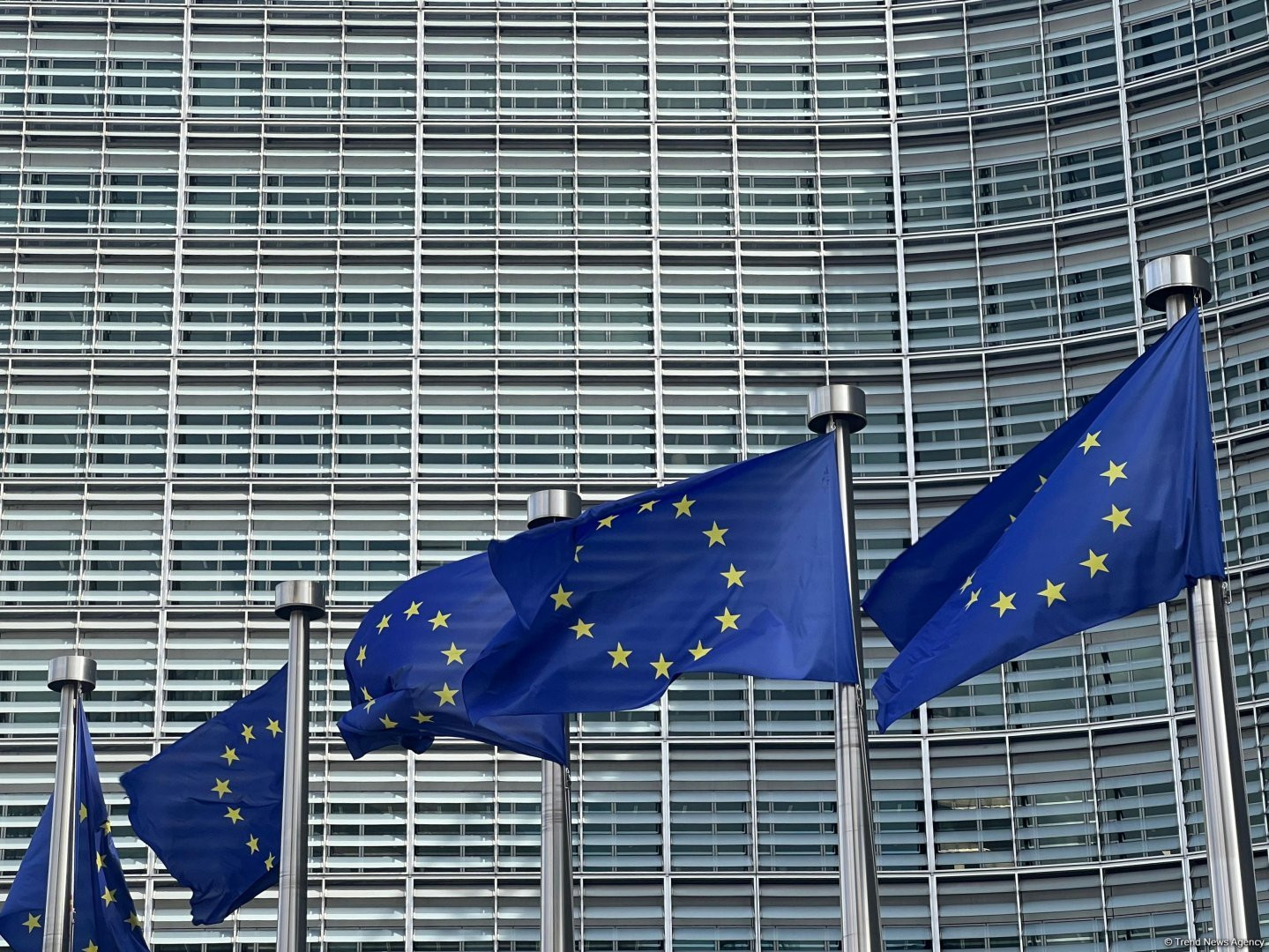
Hence, leading European politicians must show more determination in rejecting the unfounded positions of the European Parliament, which continues to adopt anti-Azerbaijan resolutions. On the economic front, the European Commission’s leadership has, in recent months, stepped up dialogue with Azerbaijan and has pledged to adopt a more active and result-oriented approach to the bilateral relationship.
Proposals such as the establishment of a Connectivity Partnership with Azerbaijan are to be welcomed, but more decisive and rapid-scale investment is required if the EU wishes to establish itself as a net-positive contributor to the new regional architecture.
Earlier this year, a feasibility study for the development of the Nakhchivan Railway was agreed to be launched, with the sides announcing their cooperation within the framework of the Global Gateway. Such specific projects requiring close coordination and swift investment present Brussels with a unique opportunity to make a lasting contribution and ensure that the narrative remains centred on cooperation and the building of interdependence rather than on the divisive narratives voiced throughout the now-former conflict.
It is the responsibility of any state engaging with an external region to adapt and act in accordance with emerging regional realities. In the recent period, Azerbaijan has too often witnessed how different powers around the world are attempting to deny or deliberately contradict the ‘new normal’ being shaped in the South Caucasus. The Washington Summit of August 2025 served as an important commitment by both countries to come together, turn the page on conflict and build forward through mutually beneficial initiatives such as economic liberalisation and societal dialogue.
Living in peace and stability is in the interest of Azerbaijan and should be in the interest of all other neighbouring actors. Subsequent high-level engagements between the President of Azerbaijan and the Prime Minister of Armenia since August 2025 reaffirm this commitment, renewing the initial sense of momentum and optimism that had emerged.
Looking ahead
Genuine peace should be durable and comprehensive, rather than incomplete and prone to new confrontations. To meet this challenge, the Armenian government must reflect on recent developments surrounding issues like cultural heritage and conclude whether Armenian society is in fact prepared for peace with Azerbaijan.
Similarly, external partners, particularly those with a track record of acting in ways that destabilise the South Caucasus, must accept that the region is fundamentally different from what it was less than a decade ago. The sooner these realities are accepted, and the legitimacy of Azerbaijan’s position is no longer undermined and questioned, the faster the South Caucasus can move decisively towards full normalisation. In the meantime, a delicate balance between hope and concern will prevail, an approach Azerbaijan has already adopted.
https://news.az/news/between-hope-and-concern-the-path-ahead-for-the-south-caucasus