The departure of Prime Minister Keir Starmer in the United Kingdom naturally prompts analysts to assess the potential impact on the country’s various external relationships. With Azerbaijan now an established partner of the United Kingdom, this relationship is no exception. Nevertheless, the answer in this case appears to be as straightforward as it is significant: the two countries are strategic partners and, since the announcement of their strategic partnership in August 2025, have continued to take important steps towards strengthening trust and advancing mutual benefit.
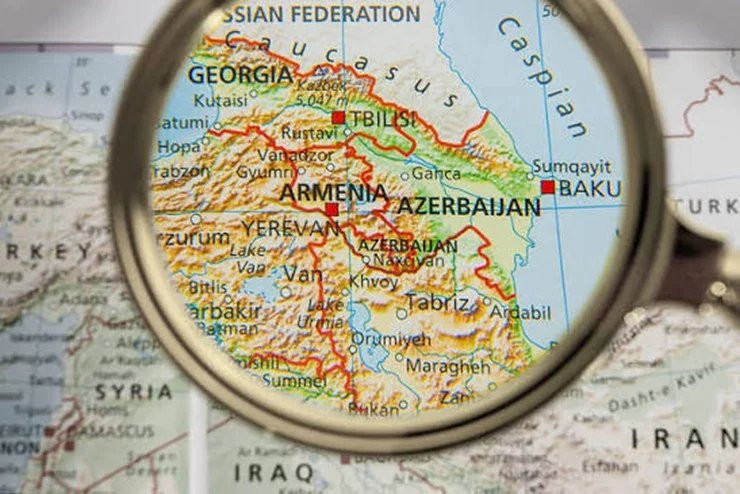
Evolving regional realities in the South Caucasus, as well as the broader Caspian region, are directly affecting the role played by external actors. In recent months, most analysis has focused on the United States and the European Union, with the roles of both actors continuing to evolve in line with regional developments. However, one actor, namely the United Kingdom, deserves greater attention. In particular, this concerns the ways in which London's contribution can assume a more systematic and regional dimension in an increasingly interconnected region that is attracting growing global attention.
The UK, primarily through its comprehensive bilateral relationship with Azerbaijan, has long played a distinct role in the South Caucasus. The foundation of this relationship lies in cooperation in the energy sector, with the 1994 Contract of the Century serving as its starting point. Today, that relationship has evolved into a strategic partnership. The UK continues to rank as the largest foreign direct investor in Azerbaijan, with recent figures showing that the total value of its investments has surpassed $39.9 billion. This demonstrates that the dual approach underpinning Azerbaijan–UK relations — namely the combination of sustained economic cooperation and effective political coordination — remains firmly in place.
Existing mechanisms have added considerable depth to Azerbaijan–UK ties and have contributed positively both to Azerbaijan’s development and to the evolution of the UK’s strategic role in the region. However, strategic partners are rarely content with simply attaining this status. What distinguishes a strategic partnership from other forms of cooperation is the ability of states to adopt forward-looking approaches and ensure their relations remain resilient to emerging realities while continuously expanding their scope and potential.
For Azerbaijan and the UK, this is especially relevant in the context of rapidly emerging opportunities in the South Caucasus and the wider Caspian region. These opportunities were previously constrained by conflict and political deadlock but have expanded rapidly following Azerbaijan’s full restoration of its sovereignty and territorial integrity. Moreover, Azerbaijan’s growing political and practical alignment with the countries of Central Asia, together with its leading role in unlocking the potential of the Middle Corridor, presents Baku and London with unique opportunities to deepen their partnership even further.
Since August 2025, the two countries have taken important steps to maintain this momentum and significantly broaden the scope of their cooperation. It is therefore important to assess these developments and, crucially, to explore areas that could further enhance the strategic weight and regional dimension of this partnership.
Sustained progress
The framework underpinning the Azerbaijan–UK relationship is arguably more comprehensive and multidirectional than ever before. In addition to strengthening the traditional areas of cooperation, Azerbaijan and the UK appear to have made a concerted effort to broaden their agenda and identify new opportunities for collaboration. Since August 2025, the two countries have achieved tangible progress in the education, defence, digital development, and both conventional and green energy sectors.
Most recently, the two sides also took steps to deepen parliamentary ties, marking another important milestone in demonstrating the broader political alignment between the countries. High-level political contacts are taking place with increasing frequency, with representatives of various ministries visiting Baku and London to engage in dialogue.
On 16 June, for example, Azerbaijan’s Minister of Economy Mikayil Jabbarov met UK Minister of State for Investment Lord Stockwood. The discussions focused primarily on opportunities to deepen the economic partnership between the two countries.
Most importantly, the range of issues discussed during these meetings is becoming increasingly broad. For example, visits to London by representatives of Azerbaijan’s Ministry of Digital Development and Transport, and their exchanges with British counterparts, demonstrate that bilateral relations have expanded considerably beyond the traditional energy sector. The UK has expressed its readiness to support Azerbaijan across a range of areas, one of the most significant being the development and modernisation of critical infrastructure. A statement issued in March 2026 highlighted the UK's interest in projects such as the development of artificial intelligence data centres, as well as providing financial support for various infrastructure projects across the country.
In addition, human capital is becoming an increasingly prominent area of cooperation, with education already established as a key pillar of the bilateral relationship. Most recently, a delegation from Azerbaijan’s Ministry of Science and Education visited the University of Warwick to discuss opportunities for expanding the existing cooperation between the two institutions.
The latest economic figures also reinforce the positive momentum seen since August 2025. In January–May 2026, bilateral trade reached $3.58 billion, representing almost a sevenfold increase compared with the same period in 2025. The figures also showed that, during this period, the UK ranked as Azerbaijan’s second-largest trading partner.
With Azerbaijan’s Deputy Energy Minister, Orkhan Zeynalov, announcing that the two sides expect to sign a new Partnership and Cooperation Agreement in the near future, bilateral engagement remains broad-based and dynamic. Such an agreement would provide another significant boost to the relationship, reinforcing the long-term commitment of both countries to their strategic partnership.
Strengthening the regional dimension through connectivity
In addition to the expansion of bilateral ties, which have become increasingly substantial, the Azerbaijan–UK relationship has the potential to make a lasting contribution at the regional level. First, the UK has consistently expressed its support for the normalisation process between Azerbaijan and Armenia, which currently remains at the forefront of the regional agenda. This is reflected in its relations with both countries, with respect for sovereignty and territorial integrity forming the cornerstone of the UK's position.
As the region continues its transition, the importance of contributions from external partners will only grow. This is particularly significant against the backdrop of ongoing attempts to destabilise the normalisation process. This reality underscores the importance of countries such as the UK, which, through its wealth of experience and resources, can act as a responsible partner by helping to minimise geopolitical competition while promoting economic cooperation.
Within this context, the development of the Middle Corridor presents a unique opportunity. The UK's Trade Envoy to Azerbaijan and Central Asia, Lord John Alderdice, has on several occasions expressed the country's willingness to support states that play a vital role along the route. In particular, there is recognition that the expertise of British companies in the aviation and manufacturing sectors aligns closely with the strategic needs of countries such as Azerbaijan.
In one of his interviews, the Trade Envoy specifically identified airport and port planning, as well as railway modernisation, as areas in which the UK can make a lasting contribution. Indeed, British companies have already played an important role in planning and infrastructure development, particularly in the post-conflict reconstruction of Azerbaijan's Garabagh region.
Chapman Taylor, a UK-based architecture and masterplanning firm, was appointed by the Azerbaijan State Committee for Urban Planning and Architecture to develop a master plan for the city of Shusha. The company has also prepared a master plan for Jabrayil, with both cities having the potential to develop into regional hubs for sustainable development and economic growth.
Moreover, BP's Shafag solar power plant in Jabrayil, which is expected to be completed in 2027, will create local employment opportunities and generate approximately 500 GWh (gigawatt-hours) of renewable electricity.
The expansion of similar cooperation to transport and logistics infrastructure would therefore be both logical and strategically significant. From a geopolitical perspective, supporting the development of the Middle Corridor is also consistent with the United Kingdom's strategic interests.
The Strait of Hormuz crisis, uncertainty surrounding which persists to this day, demonstrated the vulnerability of maritime transport and global supply chains to armed conflict. Together with the continuing war in Ukraine, which has compelled many European countries to diversify their energy supplies, it has helped elevate the Middle Corridor's importance to the global level.
The project, however, is not without its challenges and remains at a critical stage of development. Further work is needed to ensure regulatory harmonisation and expand capacity in line with growing demand. In this complex but essential process, the engagement of partners such as the UK, which has a proven track record of investment-driven development in the region, is increasingly becoming a strategic necessity.
Moreover, with relations between the United Kingdom and Kazakhstan — another key country along the Middle Corridor—also assuming greater strategic importance, there is an opportunity for the UK to coordinate its contribution to the transport corridor with both countries and further accelerate regional integration.
Azerbaijan's full participation in the C6 framework further strengthens this potential, creating real opportunities for the three countries to work together towards a common objective. An important foundation is already in place, with UK Export Finance (UKEF) having mobilised financing for projects in both Azerbaijan and Central Asia in recent years. This once again demonstrates the UK's commitment to supporting key regional initiatives in practical terms.
Statements by UK officials to date confirm that the country recognises the importance and potential of the Middle Corridor. A logical next step would therefore be for London to articulate a more concrete vision for its engagement with the corridor, with cooperation with Azerbaijan and Kazakhstan forming an integral part of that strategy. Such an approach has the potential to make a significant contribution to the long-term stability and prosperity of the South Caucasus and the wider Caspian region. Given the geopolitical developments affecting the region, this opportunity is more significant than ever.
Security cooperation
Another avenue through which Azerbaijan and the UK can broaden their ties and give the relationship a stronger regional dimension is through trilateral or minilateral cooperation on an issue of vital mutual importance: security.
Despite positive developments aimed at achieving lasting stability in the South Caucasus, security remains a highly sensitive issue, particularly against the backdrop of ongoing armed conflicts to both the north and the south of the region. In this regard, the UK has demonstrated a strong political commitment, including at the diplomatic level, to strengthening cooperation with Azerbaijan in military and defence matters.
Since August 2025, several meetings have taken place between senior officials in both Baku and London. In early 2026, a delegation from Azerbaijan's Ministry of Defence Industry visited London, demonstrating that dialogue in the defence industry sector is also intensifying and adopting a more forward-looking approach.
However, there is an additional dimension that the UK should consider in its security relationship with Azerbaijan. Azerbaijan and Türkiye are well-established allies in this sphere, with President Ilham Aliyev regularly emphasising the unique nature of the ties between the two countries. At the same time, the UK and Türkiye have also been steadily expanding their cooperation in the defence sector.
The signing of a new Security and Defence Partnership between the UK and Türkiye at the NATO Summit in July 2026 marked an important step forward. The agreement is expected to bring the two countries even closer following the landmark deal for Türkiye to acquire Eurofighter jets from the UK in October 2025.
Moreover, the partnership was signed amid a broader reassessment of Türkiye's role in Euro-Atlantic security, with the NATO Summit in Ankara reigniting discussions about the country's strategic importance to the Alliance. The potential for closer cooperation among Azerbaijan, Türkiye and the United Kingdom is therefore even greater than it was in the autumn of 2025, with all three countries having taken concrete steps to deepen their engagement in the intervening period.
A resilient foundation with more still to come
As Azerbaijan and the UK approach the first anniversary of their strategic partnership, the bilateral relationship has taken further significant steps, once again reinforcing the importance of the ties for both countries. In reality, the strategic nature of the relationship had become apparent well before the formal announcement in August 2025.
Nevertheless, a concerted effort has been made in recent years to ensure the partnership continues to evolve and develops the resilience required of strategic relationships in an increasingly complex international environment. The expansion of cooperation into new areas, alongside continued progress in more traditional fields, has produced fresh successes in bilateral relations. This confirms that the partnership rests on three key pillars: mutual trust, shared objectives and a long-term commitment.
These factors have shaped the relationship and will continue to do so, not least because of the wide range of opportunities available to Baku and London as they seek to take their partnership to the next level.
https://news.az/news/azerbaijan-uk-relations-advancing-the-strategic-partnership