The relationship between Azerbaijan and the United Kingdom recently experienced a new milestone. In August 2025, Stephen Doughty, the UK Minister of State for Europe, North America, and Overseas Territories, visited Azerbaijan. His meeting with President Ilham Aliyev, the substance of the discussions held and his engagement with the broader business community served as a vital reinforcement of a mutually beneficial and now historic partnership which is continuing its firm ascendancy. Official contacts between the countries have been well-institutionalized for some time, with dialogue taking place regularly in the format of an ‘Intergovernmental Commission’ (seven have been held to date) and the Strategic Dialogue (five have been held to date). Partnership in crucial sectors has a unique track record, with the energy sector standing out as the area where the interests of the two sides have most clearly overlapped. However, as the most notable outcome of the UK minister’s visit, the announcement of the upgrade of relations to the level of a ‘strategic partnership’ deserves special emphasis, culminating a highly successful trajectory of intensifying and broadening relations between the two countries.
Azerbaijan-UK relations perfectly resemble what a strategic partnership has to entail, how two countries can arrive at this point, and the kind of approach that is needed for this ascendancy to continue in the years to come. Most crucially, the relationship embodies several critical features which are indispensable to any strategic partnership to be durable and forward-looking. These are, among several others, the institutionalization of transparent dialogue, the consistent determination to upgrade ties across numerous dimensions, and the ability to adapt and develop the relationship in accordance with external factors and threats.
A uniquely consistent partnership
The UK was one of the first countries to recognize Azerbaijan’s independence after the collapse of the Soviet Union. As the country was initiating the highly complex process of establishing itself in the international arena post-independence, it was the UK’s BP, as part of a consortium consisting of other foreign companies, that signed a ground-breaking ‘contract of the century’ with Azerbaijan’s SOCAR to help with the transportation of Azerbaijani oil and gas to Western markets. The 1990s were an unimaginably difficult time for the country, with leadership in Baku having to combine the aftermath of the Soviet period with the occupation of Azerbaijani territory by Armenia, a devastating outcome of the First Karabakh War.
However, as in most scenarios, it is by overcoming suffering and hardship that the backbone of something, in this case Azerbaijan’s foreign policy strategy and its relations with several of its allies, takes shape. The period between 1992 and 1995 initiated what is now a decades-long trajectory of consistent and targeted British investment into the country. Several statistics stand out and must be pointed out here: first, between 1993 and the first six months of 2023 alone, the UK invested USD 35 billion into the country, a clear leader in this regard. Most symbolically, however, this trend has continued to this day, with both UK FDI into Azerbaijan and the bilateral trade volume between the countries reaching new highs. The most recent figures for 2025, released by the Central Bank of Azerbaijan, confirm that the UK is still the largest foreign investor into the country, with USD 806.3 million invested in the first six months of the year. Moreover, the volume of trade between Azerbaijan and the United Kingdom reached $886.3 million in January-July 2025, representing a 61% increase compared to the same period of the previous year.
The institutionalization of cooperation between Azerbaijan and the UK is equally advanced. In April of this year, within the framework of the 7th meeting of the Azerbaijan-UK Intergovernmental Commission, UK Export Finance (UKEF) announced a £5 billion loan guarantee for projects in Azerbaijan, to be directed towards ‘priority projects’ in various spheres. Since this announcement, tangible progress has been made. The UK recently completed its first transaction within this framework, when Silk Way West Airlines purchased a state-of-the-art Boeing 777 full-flight simulator by securing the UKEF’s Direct Lending Facility. This represented the first such investment by the UKEF into the region’s aviation industry.
More recently, at the Azerbaijan International Investment Forum held this September, the UKEF reinforced its commitment to the agreements, highlighting several of its projects in Türkiye as an important focal point for pursuing similar activity in Azerbaijan. The UKEF representative mentioned solar and wind industries in which Azerbaijan is gaining an increasing foothold, as well as healthcare and education as areas toward which the UK and Azerbaijan can direct their attention. This highlights that in Azerbaijan, the UK sees a highly valuable partner for cooperation in areas that are rapidly gaining the strategic significance which they previously lacked, or which was not attributed to them. There is hope and expectation that the first deal concluded in July will generate further momentum.
Fergus Auld, the UK’s Ambassador to Azerbaijan, recently stated that John Alderdice, the UK’s trade envoy to Azerbaijan and Central Asia, is expected to visit the country by the end of the year. This would undoubtedly continue the positive and fruitful ambiance which currently surrounds the ties. The Trade Envoy had, in fact, recently emphasized the willingness of UKEF to explore new projects in both the South Caucasus and Central Asian regions, including in Georgia and Kazakhstan. In fact, the UK has, for some time, been developing relations with several Central Asian countries. This includes a strategic partnership with Kazakhstan, a comprehensive partnership with Uzbekistan and a fund aimed at supporting SMEs from Kyrgyzstan seeking to operate in the UK. These were announced during the now former Foreign Minister David Cameron’s landmark trip to Central Asia. In parallel with the growing strategic alignment between Azerbaijan and Central Asian countries, including within the framework of the Organization of Turkic States (OTS) and in relation to the development of the Middle Corridor, these dynamics provide an additional context for Azerbaijan and the UK to more closely coordinate their actions.
A period of strategic convergence
The strength of the ties and particularly their economic foundation is undeniable, with Azerbaijani and British officials openly and regularly expressing interest in advancing cooperation in ways that will bring more immediate and long-term benefits to both countries. Hence, the cooperation framework, which now extends way beyond ‘just oil and gas’, is actively growing in scope. The present moment, however, deserves particular attention. Arguably, at no other point in their bilateral relationship have Baku and London found their strategic interests to be overlapping in the way that they are now. This stems from a series of factors, including Azerbaijan’s growing significance for the Middle Corridor, a project of special significance for the UK and in which British businesses are keen to invest.
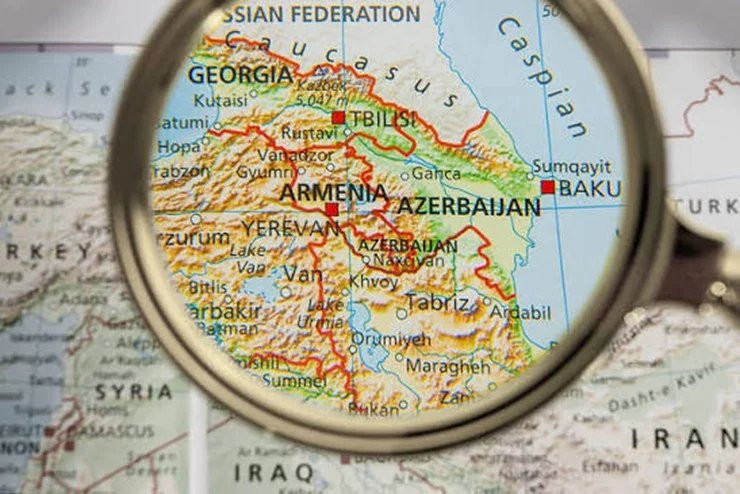
Moreover, the ongoing peace process between Azerbaijan and Armenia, stimulated by the involvement and vision of the current US Administration, adds an additional area of convergence. The South Caucasus, through the newly announced Trump International Route for Peace and Prosperity (Zangezur Corridor), is expected to form an integral part of the Middle Corridor. In the aftermath of these developments, the UK has taken its own steps to ensure that its approach to the region is ‘up to date’, recognizing the opportunities that will arise if Azerbaijan and Armenia reach the stage of ‘official’ peace.
The announcement of a strategic partnership with Azerbaijan coincided with a similar announcement with Armenia, with Stephen Doughty engaging in similar meetings in Yerevan. These steps might be indicative of a growing consideration for the South Caucasus in the UK’s broader foreign policy strategy, which, along with American involvement, promises to enhance regional investment opportunities and set foundations for a collaborative spirit which will help fulfil the region’s potential.
Among the things that differentiate a strategic partnership from other models is the intensity and frequency of contacts between the sides. In this case, the collaborative and inquisitive spirit reported at official meetings has rapidly spread to other dimensions, including to the ‘expert level’. On September 25-26, 2025, the inaugural “Azerbaijan-UK Policy Dialogue”, organized by the Institute of Development and Diplomacy, was held in Baku. The event brought together business leaders, think tank representatives and entrepreneurs from both sides, seeking to play their part in further advancing an already content-rich bilateral agenda. Crucially, the discussions arrived unanimously at a common conclusion: the list of reasons for the two countries to join forces on multiple issues and unveil new avenues for cooperation is as comprehensive as ever before. Undoubtedly, advancing the bilateral agenda and extracting as much mutual benefit from common initiatives, of which education is a prime example, is at the heart of this list.
Nevertheless, the two countries have reasons to cooperate beyond their traditional bilateral framework, which would create additional mechanisms for the two sides to work in pursuit of mutual objectives.
In this regard, the security sphere and the role of Türkiye as a potential ‘third partner’ is noteworthy. Contacts in the “Azerbaijan-UK-Türkiye” format could serve as the next logical step, especially given Ankara’s already advanced relationship with both sides. With Baku, the country is in a unique strategic military partnership, whereas its military ties with London have been in constant development for some time. Both the UK and Türkiye are NATO members and have profound ties in the defense industry, recently underscored by a deal for British Eurofighter Typhoon jets to be sold to Türkiye.
The UK’s 2025 National Security Strategy labels Türkiye as a “key partner” because of its strategic location, something which, by logic, should now extend to Azerbaijan given both the recent announcement of a strategic partnership but and Baku’s growing authority on the geopolitical landscape. Military modernization and technological advancement are a key priority for all three countries, in the same way as their nationally defined commitment to combatting terrorism and extremism. Hence, there is sufficient strategic convergence to delve into the potential of developing a trilateral military cooperation framework. All three actors possess strategically crucial capabilities, with the fusion of technological advancement, world-leading intelligence capabilities and tested combat-readiness a unique opportunity to consolidate both national and regional security.
In this light, the UK’s recent appointment of a resident defence attaché in Baku holds particular significance, indicating that London is open to military cooperation with Azerbaijan, and not just Türkiye. It would therefore be reasonable to expect the Azerbaijani side to welcome the UK’s enthusiasm in this regard, with the clear benefits of the mentioned trilateral format offering a unique opportunity to elevate Azerbaijan-UK ties to an entirely new dimension.
Looking ahead
The bilateral agenda between the two countries is flourishing in ideas, opportunities and discussions. This process has historically been underpinned by mutual will, both political and societal, and is something which continues to this day. However, the current moment is unique per se due to the highly favorable list of geopolitical and external factors which are pushing Baku and London even closer together. Azerbaijan is continuing its ascendancy as a regional power, serving as an exemplary model of a country that is able to pursue multi-faceted development and work towards common goals whilst staying firmly loyal to its national interests. This directly favours the country’s bilateral, minilateral and multilateral relationships as it broadens the scope of areas in which countries such as the UK can engage with Azerbaijan. Moreover, Baku’s reliability as an actor, a feeling echoed across the world, and its already vastly accumulated experience is indispensable in the advancement of common agendas and the achievement of mutually beneficial outcomes.
The Azerbaijan-UK relationship is no exception to this, with contacts between the countries now transcending beyond traditional cooperation frameworks which had shaped the agenda since Azerbaijan’s independence. At the present moment, a multi-actor process of determining and discussing cooperation opportunities and priorities is firmly underway. Most importantly, the current trajectory demonstrates that the announcement of a strategic partnership was timely and will further reinforce trust between the sides. Should this positive dynamic continue, the Azerbaijan-UK relationship will increasingly stand out as a model of how two countries, originating from different continents and, a priori, belonging to distinct power categories, can, through trust and shared objectives, advance both individual and collective security.
https://news.az/news/-azerbaijan-uk-relations-a-new-chapter-of-opportunity-and-strategic-alignment