One year on from re-election into office, the UK government is reflecting on the achievements and failures of its tenure. In the foreign policy domain, the ambitious but much required target of re-establishing Britain’s place in the world has dominated the agenda of the Foreign Office.
This comes from the realization that in more than one sphere, the UK’s performance has shown stagnation that does not correspond to its historic international prestige and reputation as a ‘world leader’. However, the international context which the Labour government inherited and continues to operate within is considerably different to previous incoming British governments.
The UK is outside the European Union, albeit with several deals in place which have preserved elements of an advanced economic relationship and is also witnessing the redefinition of the concept of transatlanticism. Crucially for its foreign policy outlook, however, the UK faces the complex and arguably unprecedented challenge of balancing between three key actors with which, for different reasons, its relations carry strategic importance – the US, the EU and China.
This balancing, however, is not an attempt to elevate itself to their respective military or economic authority. The UK has accepted that it needs a new leadership role in a new ‘power category’. Although it is unlikely to officially proclaim itself as one, many consider the UK, in its current form, to be the perfect illustration of a middle power. This category encompasses powers that do not (or no longer) have the capabilities to be classified as great powers but are still able to wield influence over specific areas of foreign affairs.
In fact, London’s actions in recent months point to the realization that aspiring for global leadership is no longer a realistic target. Hence, the Labour government is determined to concentrate its efforts on maximizing the UK’s remaining economic and soft power prestige. This includes strengthening ties with other ‘middle powers’ and actively pursuing trade as well as other partnership deals with “emerging powers” which are, crucially, outside the “big triangle”.
A foundationally strong relationship
The UK has comprehensive relations with a range of powers across different continents. However, within the context of ‘middle powers’, it is arguably the UK-Türkiyerelationship that stands out as the most strategically influential, especially given its impetus on the sphere of Eurasian security and military cooperation. Just like the UK, Türkiye’s economic potential is self-evident, with both countries ranking in the top 20 global economies in terms of GDP and also in the top 10 for European economies. Bilateral economic relations are also potent, with over 3,000 British companies operating in Türkiyeas of today and the total trade turnover totalling £28 billion in 2024.
For several years, the economic relationship was underpinned by the 2020 UK-Türkiye Free Trade Agreement (FTA), signed in response to the UK finalizing its departure from the European Union and with the aim of maintaining some form of a ‘preferential’ agreement given the customs union in place between the EU and Türkiye. However, even though bilateral economic relations are significant, and Türkiyeranks as the UK’s 16th largest trading partner, the above-mentioned FTA is believed to have run its course by both sides. There is considerable appetite for closer economic cooperation, a feeling which originates from the appreciation by both sides that the bilateral relationship carries mutual strategic importance.
In May 2025, official delegations met and agreed on the importance of ‘relaunching’ talks for the signing of an updated and ‘modernized’ trade agreement, which will reflect new geopolitical realities and the growing synergy between the sides in other spheres such as military cooperation. Scheduled for late July, the first round of talks on a new FTA are expected to begin a complex but highly necessary process of upgrading economic ties and consolidating what has been historically described by both sides as a ‘strategic’ partnership. Most recently, a June meeting between the two country’s Foreign Ministers in Ankara reaffirmed this commitment.
As NATO members and now both outside the EU, Türkiyeand the UK acknowledge the broader military and strategic importance of their relationship. In the current moment, as a country aiming to revitalize its foreign policy engagements and even pursue new directions, deepening ties with Türkiyeis in the UK’s best interests. Ankara’s unique geographic position and its well-renowned diplomatic prowess enables the country to be at the heart of key processes both in its immediate neighbourhood and beyond.
This is evidenced by Türkiye’s constructive role in attempting to mediate between Russia and Ukraine, but also its leading role in the African continent where Turkish presence is helping alleviate poverty and boost economic growth. Similarly, the ‘swift pragmatism’ of Türkiye’s foreign policy includes leadership in regional alliances, with the Organization of Turkic States (OTS) serving as a platform where Ankara, along with regional ally Azerbaijan, continues to act as a leader. Among other re-engagements, the UK has demonstrated an even more pronounced interest in the ‘East’, with the country’s relationship with Azerbaijan and several Central Asian countries entering new stages of development. This is another dimension where closer Türkiye-UK ties can facilitate transregional cooperation, with Ankara likely to continue acting as a bridge between actors which express interest in cooperation but are separated by distance and are not united by common denominators such as identity, geography or language.
More than just trade
Economic ties aside, the UK, just like several of the EU’s countries, recognize Türkiye’s military proficiency. Amidst the uncertainty surrounding security guarantees from Washington, both in times of crisis but also with regards to defence procurement, cooperation with Türkiye offers European countries a unique opportunity to acquire knowledge and expand their production capacity to meet modern-day requirements of war-time readiness and operational efficiency. As things stand, the UK’s military is fulfilling neither, a key conclusion of the Government’s Strategic Defence Review published last month.
In May 2025, the governments of Türkiye and Britain signed the “Türkiye-UK Defence Industry Council Specification (TUDIC)”, a major step towards institutionalizing cooperation in the sphere. The meeting was attended by representatives of companies from both countries. This is expected to bolster the foundations of an already well-developed partnership in this area, with training and capacity-building efforts, joint-military exercises and also Türkiye’s importing of UK arms serving as an important bedrock.
In addition to conventional security threats, the UK and Türkiye have, over recent years, also combined efforts to tackle illegal migration. In 2023, the then UK Conservative government signed a memorandum of understanding to allow UK and Turkish law enforcement officers to synchronize their measures, including UK support for a new centre based in Türkiye focusing on tackling organized immigration crime.
Middle powers – the new normal
Within the increasingly broadening middle power ‘class’, Türkiye has earned itself a leading ‘role’. Its approach consists of balancing the relentless defence of its national interests and protection from external threats with multi-layered diplomacy which advances economic prosperity and global security. For all middle powers aspiring to strengthen their global agency, this should serve as an exemplary approach of how a powerful country can make itself heard on the international arena without violating international norms whilst unrealistically aspiring for great power status.
The UK Foreign Secretary’s “progressive realism” doctrine, introduced during the Labour party’s pre-election campaign, strives to achieve this exact balance – pursuing progress and economic development without overextending and doing so whilst respecting fundamental international legal and customary laws.
Moreover, the relationship between Türkiye and the UK currently reflects what is a new ‘mode of conduct’ for bilateral relations worldwide. States are increasingly being forced to operate in new regional frameworks, marking a transition to multilateralism, which some even describe as ‘minilateralism’. This is a consequence of the constantly growing group of ‘middle powers’ but also the retreat of the United States from prioritizing traditional transatlanticism as the core tenet of its foreign policy.
At the heart of this new approach is a commitment to ensuring that both sides in the relationship have equal degrees of agency, and that the relationship is mutually beneficial. In the Türkiye-UK case, both countries have supported each other’s individual endeavours, with the UK, considerably more often than not, supporting the prospect of Ankara’s EU membership. This cannot be said about other European countries, which have not always approached Türkiye in a fair and impartial way.
Going forward, further developing ties with Türkiye presents the UK with an opportunity to assert itself on the global stage. Middle powers are increasingly influential on the diplomatic stage, with Türkiye playing a key role in the war between Russia and Ukraine, including mediation for the Black Sea Grain Initiative which allowed vital quantities of food to be exported from Ukraine despite war commencing. Through its own initiative, the “coalition of the willing”, which aims to foster European cooperation over Ukraine amidst Washington’s preference for a personal approach, the UK is also aspiring for such leadership in conflict management.
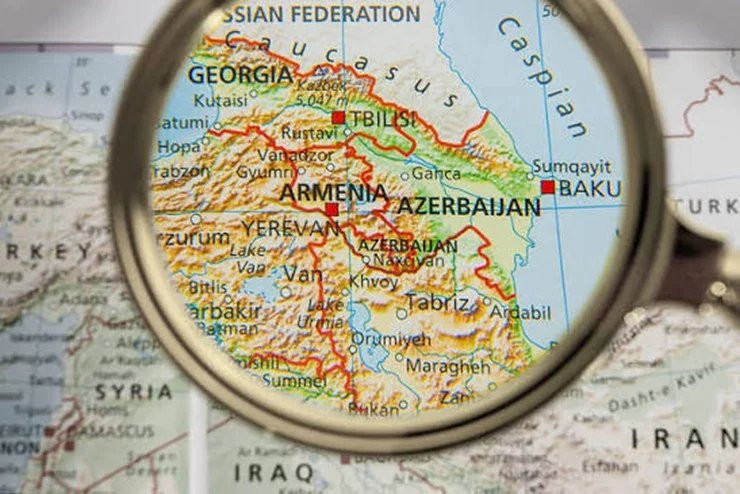
On regional levels, most notably in the South Caucasus and Central Asia, the UK’s strengthening relationship with Türkiye can further bolster what is an already comprehensive and wide-reaching British presence. As the UK adapts to the changing nature of its relationship with Washington and even pursues strategic deviation with the Trump administration on some fronts, siding with Türkiye can provide London with the necessary agency, resources and, crucially, credibility, to make an impact in two regions seeking long-term economic prosperity and security.