Recent political and economic developments in the South Caucasus suggest that Azerbaijan-US relations have entered a qualitatively new phase. The defining feature of this phase is the transition of bilateral cooperation from the traditional energy and security agenda to a broader geoeconomic and technological dimension.
Progress in the normalisation of relations with Armenia, the opening of regional transport links and the commencement of the practical implementation of the Trump Route for International Peace and Prosperity (TRIPP) constitute the principal political foundations of this transformation.
Political and institutional foundations of the strategic partnership
A review of the development of Azerbaijan's relations with the United States since independence shows that mutual interests have primarily centred on energy security and regional stability. The signing of the “Contract of the Century” in 1994 and the subsequent implementation of the Southern Gas Corridor defined the economic and strategic substance of these relations. At the present stage, this experience of cooperation serves as valuable institutional capital for expanding into new areas.
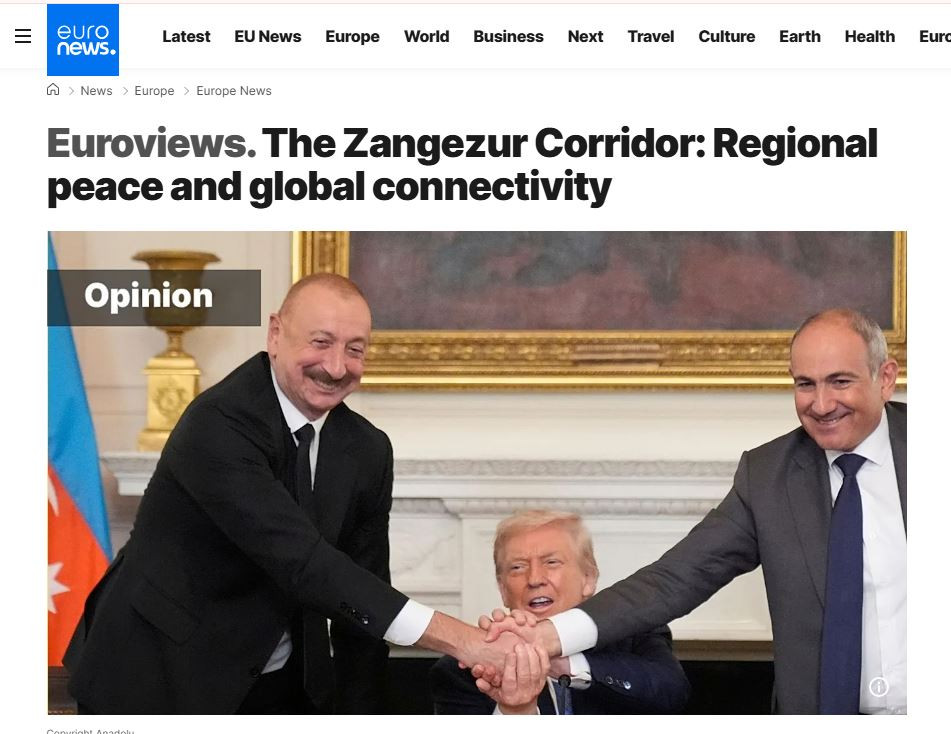
The Washington Peace Summit held on 8 August 2025 marked a turning point in this regard. Alongside the initialling of the agreed text of the peace agreement between Azerbaijan and Armenia, an agreement was reached on preparing a strategic partnership document between Azerbaijan and the United States. The signing of the Charter on Strategic Partnership during US Vice President JD Vance's visit to Baku on 10 February 2026 became the institutional expression of that political will.
The significance of the Charter extends beyond the expansion of areas of cooperation. The document establishes a framework for regular dialogue in the fields of economics, regional connectivity, technology and security. For Washington, Azerbaijan serves as a strategic link between the Caspian basin and Europe, while for Baku, the United States is an important partner that expands opportunities for investment, technology and international economic integration. The convergence of these interests creates additional opportunities for Azerbaijan's multivector foreign policy.
The normalisation process and the geopolitical significance of TRIPP
There is a correlation between the normalisation of Azerbaijan-Armenia relations and the development of the Azerbaijan-US strategic partnership. Progress in the peace process reduces the political risks associated with regional projects, while the expansion of economic cooperation creates a material foundation for sustainable peace. The opening of transit opportunities to Armenia through Azerbaijani territory and the commencement of petroleum product supplies are practical steps contributing to the development of economic confidence in this regard.
The process gained new momentum in November 2026. On 6 November, Azerbaijan, the United States and Armenia launched the activities of trilateral technical planning groups on TRIPP. At their meeting in Dublin on 12 November, Azerbaijani President Ilham Aliyev and Armenian Prime Minister Nikol Pashinyan discussed transport connectivity, border delimitation and trade. Finally, on 23 November, the launch of the practical phase of the TRIPP project was officially announced.
The presentation of Armenia's draft new Constitution on the same day is also noteworthy in terms of advancing normalisation on the legal and political fronts. Nevertheless, the signing and ratification of the peace agreement can still be regarded as outstanding tasks.
The priority significance of TRIPP for Azerbaijan lies in ensuring unimpeded transport connectivity between mainland Azerbaijan and the Nakhchivan Autonomous Republic. However, the strategic substance of the project is broader. Providing the Trans-Caspian transport network with an additional connection towards Türkiye and Europe could enhance the competitiveness of the Middle Corridor. For Armenia, the emergence of new transit and trade opportunities could contribute to overcoming economic isolation. From a geopolitical perspective, TRIPP lends a long-term economic dimension to US engagement in the South Caucasus.
Nevertheless, it would be more appropriate to associate the project's success with the expansion of connectivity in various directions rather than with the emergence of new lines of confrontation in the region.
Thus, TRIPP is not merely a transport infrastructure project but also a means of strengthening the economic foundations of peace. Although the project's transition to the practical phase represents a significant achievement, its actual geoeconomic impact will depend on the completion of infrastructure and its commercially efficient operation.
The economic dimension: critical minerals and artificial intelligence
Another important factor shaping the prospects of Azerbaijan-US relations is the structural transformation of the global economy. Access to critical mineral resources, the diversification of supply chains and competition in advanced technologies are becoming increasingly important components of the foreign economic policies of major powers.
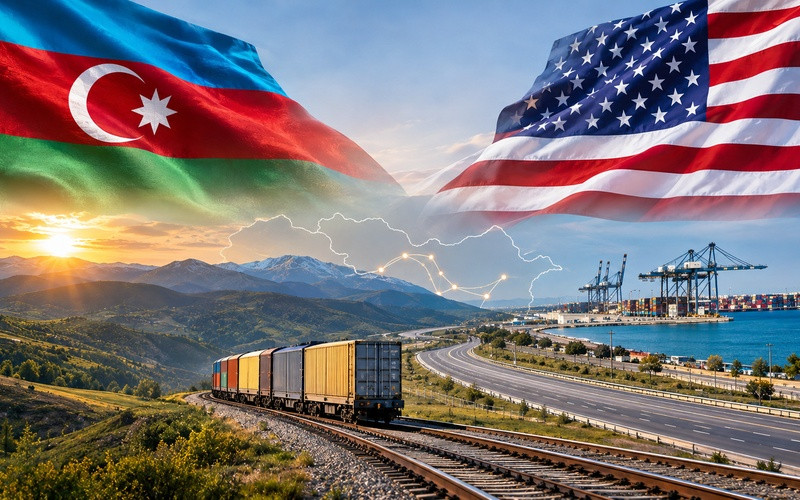
In this context, the provisions of the Charter on Strategic Partnership envisaging cooperation to facilitate the transit of critical minerals to global markets via the Middle Corridor are of particular significance. Azerbaijan's advantage lies not only in its own natural resources but also in the role it can play in establishing logistical connections between Central Asia's mineral resources and Western markets.
Once the Port of Alat, railway infrastructure and new regional connections are integrated into a unified logistics system, Azerbaijan could expand its opportunities to generate added value in processing, warehousing, certification and other service sectors, alongside transit revenues. To achieve this, it is essential to coordinate transit policy with industrial and investment policies.
Cooperation in artificial intelligence and digital infrastructure represents a new direction in the development of bilateral relations. The establishment of data centres in cooperation with US companies, joint research and innovation initiatives, the training of qualified specialists and the development of Trans-Caspian digital connectivity could accelerate Azerbaijan's transition to a knowledge-based economy. In this regard, energy supply, data security, technology transfer and a competitive regulatory environment require particular attention.
Current developments indicate that the new phase of Azerbaijan-US relations rests on three interconnected factors: strengthening political trust, establishing the economic foundations of regional peace and expanding technological cooperation. The commencement of the practical implementation of TRIPP provides significant impetus for bringing these factors together within a unified geoeconomic agenda.
In the next phase, translating the political agreements reached into concrete investment projects, ensuring private-sector participation and completing the legal foundations of normalisation will be of decisive importance.
Making effective use of these opportunities could strengthen Azerbaijan's regional position while contributing to the deepening of a long-term, mutually beneficial partnership with the United States.