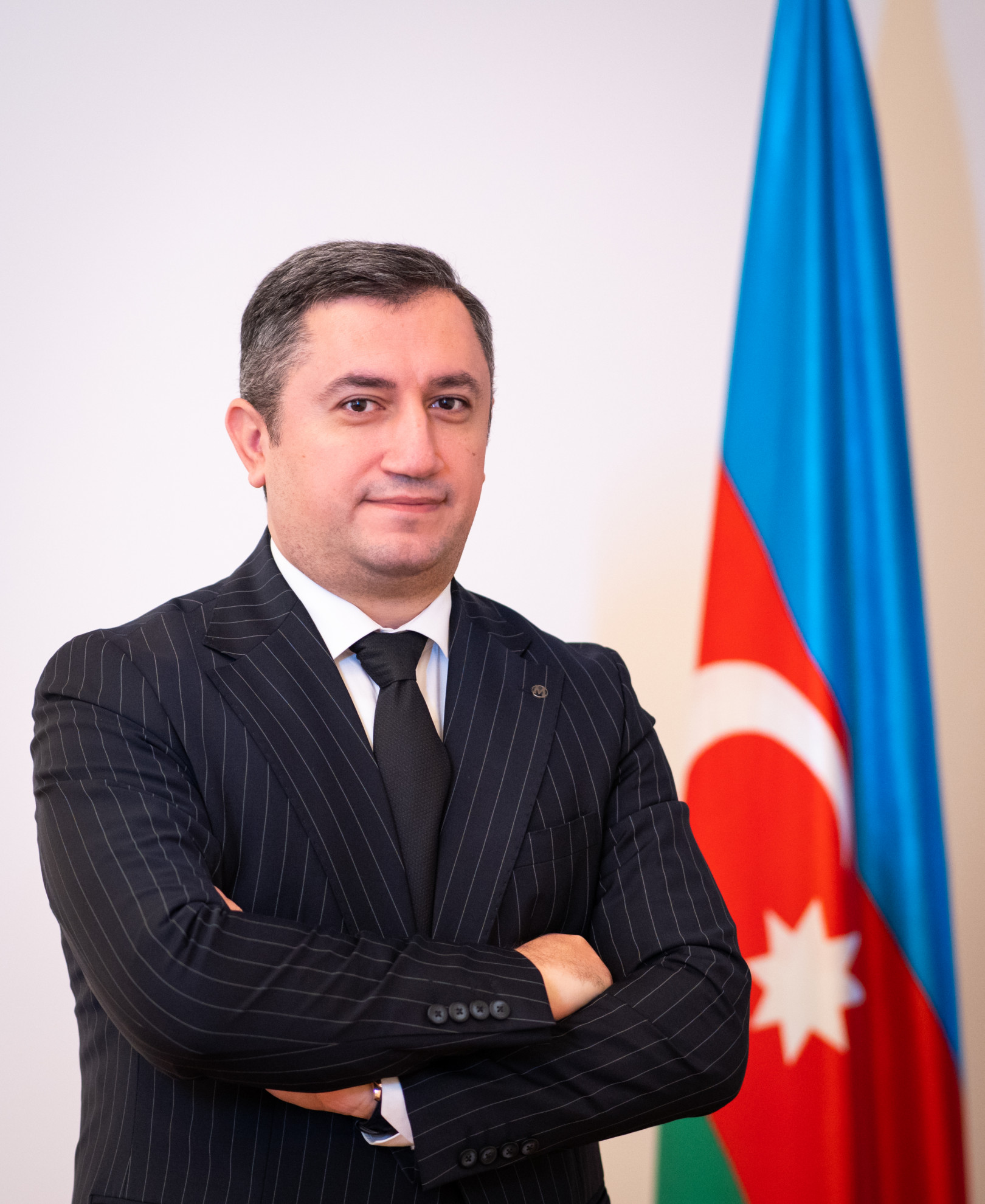
Changes in the international relations system have brought new forms of interstate cooperation to the fore. Intensifying competition among global powers, regional conflicts, and challenges related to transport and energy security make it increasingly necessary for individual states to pool their capabilities. Under these circumstances, the question of the Organization of Turkic States (OTS) emerging as an independent center of power assumes particular importance. In this context, an independent center of power should not be understood as a bloc directed against other states, but rather as an association of states capable of identifying shared interests, co-ordinating their decisions, and exerting influence on international relations, writes Matin Mammadli, Head of Department, Center for Analysis of International Relations and Multiculturalism; PhD in Political Science, Associate Professor.
Relations among the Turkic states rest on common ancestry, linguistic affinities, historical memory, and cultural values. These factors constitute an important advantage in fostering mutual trust. Nevertheless, cultural and historical bonds alone are insufficient to sustain integration. A shared identity must be complemented by economic interests, political will, and functioning institutional mechanisms. The Nakhchivan Agreement, signed on 3 October 2009, established the institutional foundation for cooperation among the Turkic states. The renaming of the body as the Organization of Turkic States in 2021, in turn, reflected an expansion of its activities.1
One of the principal challenges to the development of the OTS is the location of its member states in distinct geopolitical environments. Türkiye is more closely engaged with developments in the Black Sea, the Mediterranean, and the Middle East, whereas the Central Asian states are more directly concerned with continental security, borders, water resources, and transit issues. Security in the South Caucasus and East–West connectivity occupy a prominent place on Azerbaijan’s strategic agenda. These differences in foreign policy priorities may, at times, complicate the formulation of a common position within the Organization. In our view, overcoming such obstacles requires shared political will, nationally grounded strategic thinking, and a phased agenda for cooperation.
Another fundamental condition for integration is respect for the sovereign equality of states. Although members differ in their economic, demographic, and military capabilities, these disparities should not give rise to a political hierarchy within the Organization. Any attempt to interfere with a member state’s national decision-making authority or to assume a dominant position could undermine mutual trust. Accordingly, the principles of consensual decision-making, voluntary participation, and mutual benefit must be upheld within the OTS. Such an approach would both strengthen the Organization’s internal resilience and sustain the member states’ interest in integration.
The expansion of political, economic, and cultural co-operation
In recent years, relations among the Turkic states have developed considerably in both bilateral and multilateral formats. Notable examples include Azerbaijan’s alliance with Türkiye, based on the 2021 Shusha Declaration,2 as well as its political agreements of an allied character with Kazakhstan, Kyrgyzstan, and Uzbekistan.3 The informal summit held in Shusha in 2024 and the 12th OTS Summit convened in Gabala in 2025 demonstrated the continuity of political dialogue. The inclusion of security issues alongside economic connectivity on the agendas of these meetings also confirms the broadening of the Organization’s priorities.
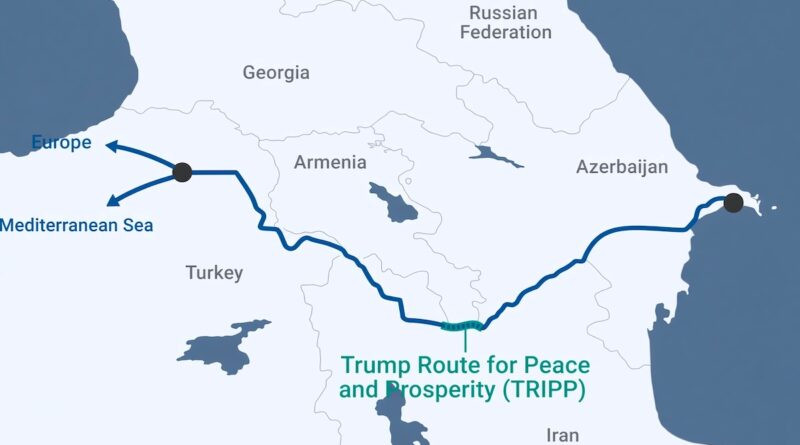
The growing importance of transport corridors and reciprocal trade in economic cooperation deserves particular emphasis. The Trans-Caspian International Transport Route, also known as the Middle Corridor, which is being developed with Azerbaijan’s participation, facilitates stronger connections between Central Asia, Türkiye, and Europe. The Baku–Tbilisi–Kars railway and the Port of Alat provide essential infrastructure for this purpose. Genuine economic integration, however, depends on more than the existence of transport facilities. It also requires the harmonization of customs procedures, digital document exchange, coordination of tariff policies, and joint investment.4
Economic relations between Azerbaijan and the OTS member states have expanded markedly in recent years. According to calculations based on data from the State Customs Committee for 2025, Azerbaijan’s trade turnover with the other four full member states amounted to USD 7,263.8 million, representing an increase of 5.4 percent compared with 2024. In 2025, exports totaled USD 3,572.3 million, while imports amounted to USD 3,691.5 million.5
Cultural and humanitarian ties are also among the factors underpinning the sustainability of integration. The Turkic Academy, TÜRKSOY, and other platforms for cooperation contribute to the study of shared heritage, cultural exchange, and the development of scholarly relations. The significance of this dimension is not confined to preserving historical affinities. Education, scientific research, and contacts among young people help strengthen long-term societal ties among the Turkic states [9].
The strategic significance of military and security co-operation
Deepening cooperation in the military and security sphere is also essential if the OTS is to become an independent center of power. In the contemporary geopolitical environment, safeguarding economic potential and transport projects requires a reliable security framework. It is worth noting that, at the 12th Summit held in Gabala on 7 October 2025, President Ilham Aliyev emphasized the importance of the Turkic states acting as a unified center of power and proposed that joint military exercises involving member countries be held in Azerbaijan in 2026.6 This initiative is intended to place security cooperation on a more systematic footing.
A degree of experience has already been accumulated in joint training and operational cooperation. Military personnel from Azerbaijan, Kazakhstan, Kyrgyzstan, Tajikistan, and Uzbekistan participated in the “Birlestik-2024” exercise held in Kazakhstan in July 2024.7 In September 2025, Baku hosted the multinational special forces exercise “Eternal Brotherhood IV” (“Sarsılmaz Qardaşlıq – IV”).8 In October 2025, official information was also released concerning the “Birlik-2025” exercise, involving Azerbaijan, Kazakhstan, Kyrgyzstan, and other participants.9 Although these developments indicate positive momentum in military relations, they do not justify the conclusion that the OTS currently functions as a unified military alliance.
Looking ahead, it would be beneficial to expand regular consultations among defense institutions, joint exercises, military education, and exchanges of experience. Opportunities for cooperation also exist in cybersecurity, counterterrorism, border security, and emergency response. Progress in these areas must be aligned with each member state’s legal obligations, sovereign decisions, and actual security needs. The development of the OTS into a stronger security partnership should not be aimed against any state or alliance. On the contrary, such cooperation could contribute to stability and predictability in relations across Eurasia.
Azerbaijan is among the states that have played an active role in the establishment and subsequent development of the OTS. Its hosting of the signing of the Nakhchivan Agreement, the organization of the Shusha and Gabala summits, and its bilateral alliance relationships with member states attest to the consistency of this policy. Azerbaijan’s geographical position also creates distinctive opportunities: through the Caspian basin, the country constitutes an important link in political, energy, and transport connectivity between Central Asia and Türkiye. By complementing these advantages with concrete projects and multilateral initiatives, Baku contributes to the deepening of cooperation within the Organization.
In conclusion, the principal prospects for integration within the OTS depend on bringing a shared historical and cultural identity into alignment with political will, mutual economic benefit, and security cooperation. The diversity of member states’ geopolitical interests is an objective reality. Nevertheless, these differences can be managed on the basis of sovereign equality and mutual respect for sovereignty. In our view, the institutionalization of political consultations, the expansion of joint economic projects, and the gradual development of military and security ties should constitute the principal priorities for consolidating the Organization as an independent center of power. Rather than becoming an instrument of confrontation with other powers, the OTS should develop into an effective organization that reconciles its members’ national interests and contributes to interregional cooperation and stability. Azerbaijan’s active and proactive position in this process is of considerable importance for the Organization’s future development.
1 https://turkicstates.org/en/presidental-summits
2 https://president.az/az/articles/view/52115
3 https://president.az/az/articles/view/73518
4 https://www.turkicstates.org/en/areas-of-cooperation-detail/2-economic-cooperation
5 https://apa.az/sahibkarliq/azerbaycanin-tdt-ye-uzv-olkeler-ile-ticaret-dovriyyesinin-hecmi-melum-olub-938301
6 https://president.az/az/articles/view/70315
7 https://mod.gov.az/en/news/opening-ceremony-of-birlestik-2024-exercise-was-held-video-52320.html
8 https://mod.gov.az/en/news/baku-hosts-eternal-brotherhood-iv-multinational-joint-special-forces-exercise-55504.html
9 https://mod.gov.az/en/news/quot-unity-2025-joint-exercise-is-underway-55849.html