


Executive Summary:
-
European Council President António Costa’s March 11 meeting with Azerbaijani President Ilham Aliyev highlighted Baku’s growing role in the European Union’s efforts to diversify energy supplies and expand European connectivity with the South Caucasus.
-
Azerbaijan has increased natural gas exports to Europe since 2022 and now supplies 12 European countries with gas primarily via the Trans Adriatic Pipeline.
-
Closer cooperation with Baku helps the European Union diversify energy supplies and reinforce stability across a region increasingly central to Europe’s security and economic interests. It helps Azerbaijan expand energy exports and connectivity projects.
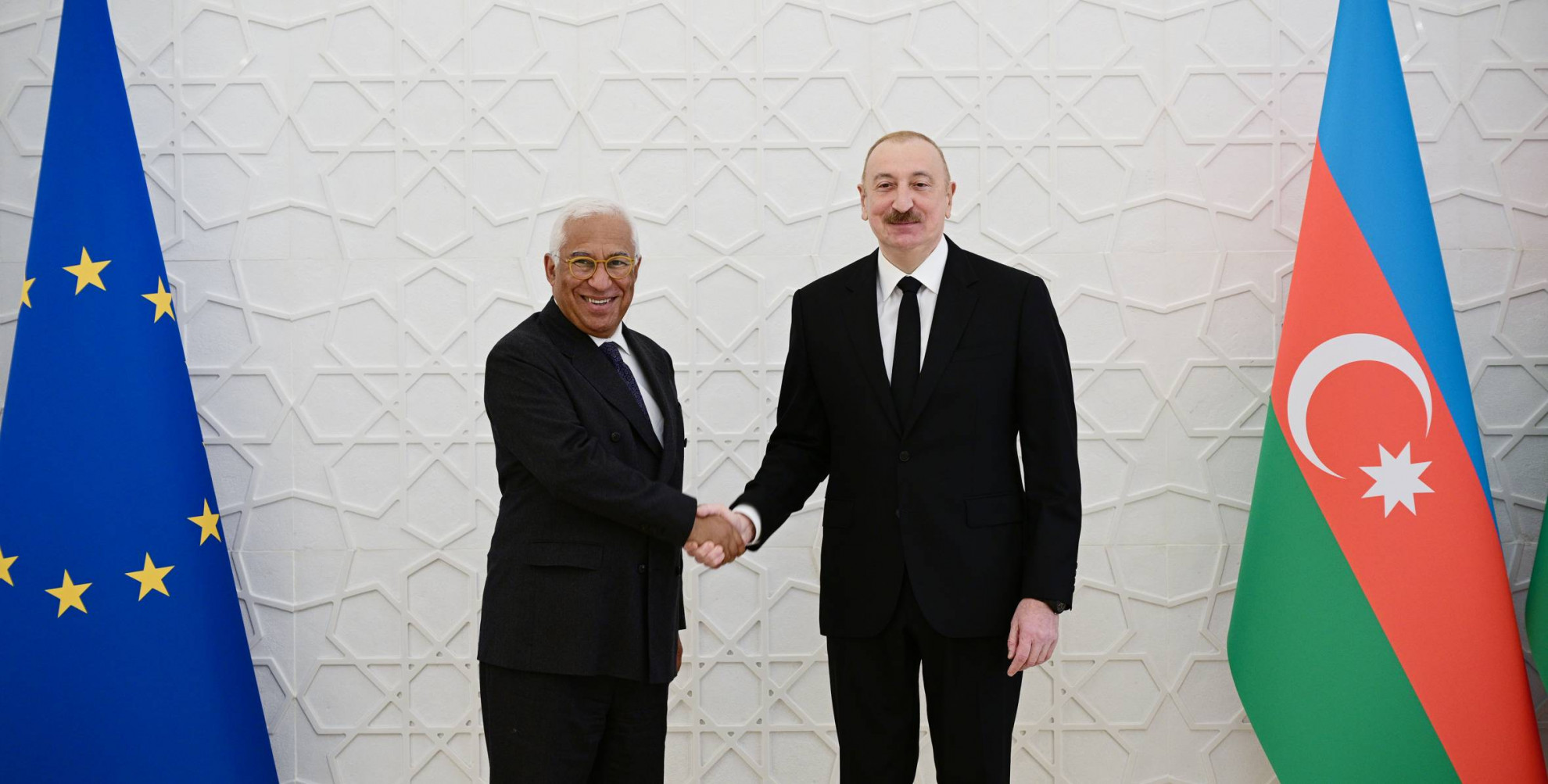
On March 11, European Council President António Costa held talks in Baku with Azerbaijani President Ilham Aliyev (Azertec, March 11). The visit came at a time of heightened geopolitical uncertainty across Europe’s eastern neighborhood amid Russia’s war against Ukraine and the Middle East, underscoring the growing importance of EU–Azerbaijan relations. The leaders used the occasion to reaffirm their commitment to strengthening cooperation across a broad agenda ranging from energy and connectivity to security and economic development (President of Azerbaijan, March 11).
The two presidents issued a joint press statement following the meeting, emphasizing “the strategic importance of the Azerbaijan–EU partnership” and expressing their determination to deepen political dialogue and practical cooperation (Azertec, March 11). Both sides aim to build on the “positive momentum of recent high-level meetings” and expand cooperation in areas such as security, energy, and transport. The document stressed that the partnership contributes to “peace, stability, connectivity and sustainable development in the wider Black Sea, South Caucasus and Central Asia regions” (European Council, March 11). The statement also highlighted that they will continue negotiations on a new comprehensive bilateral agreement intended to provide a modern legal framework for cooperation and to replace the outdated partnership arrangement currently governing relations (see EDM, April 4, 2019).
Costa and Aliyev discussed regional security and the evolving peace process between Azerbaijan and Armenia. The two sides welcomed the “historic momentum” in the normalization process following the Washington summit on August 8, 2025 (see EDM, August 12, 2025, February 11). Costa reiterated the European Union’s support for ongoing bilateral dialogue aimed at achieving a durable peace in the South Caucasus.
Speaking after the meeting, Aliyev highlighted the breadth of EU–Azerbaijan cooperation and underscored the bloc’s position as Baku’s primary economic partner. “For us, the European Union is the number one trading partner,” he said, noting that around 50 percent of Azerbaijan’s trade turnover in January was with EU countries (President of Azerbaijan, March 11). The Azerbaijani president added that expanding economic projects and mutual investments would likely increase this figure in the coming years.
Energy cooperation remains the central pillar of the partnership. Azerbaijani gas exports to the European market continue to increase. In January, Azerbaijani gas deliveries reached two new European destinations—Germany and Austria—via the Trans Adriatic Pipeline (Caliber, January 16). With these additions, Azerbaijan supplies gas to 16 countries overall, including 12 in Europe. In 2025, Azerbaijan exported roughly 25 billion cubic meters (bcm) of natural gas, generating approximately $8.8 billion in revenue (Commonspace.eu, January 7). Exports to the European Union alone were about 13 bcm.
These figures reinforce Azerbaijan’s reputation as a reliable energy partner at a time when Europe continues to reduce its dependence on Russian energy resources. The country’s geographic position and infrastructure also allow it to serve as an energy bridge between the Caspian region and European markets.
Costa echoed Aliyev’s remarks, describing energy security as “a cornerstone of our bilateral cooperation.” He recalled that the European Union decided to diversify its energy sources in 2022 and that Azerbaijan has become central to this effort through the Southern Gas Corridor (see EDM, May 4, 2022). Costa added that the partnership has become even more important as Europe seeks to reduce dependence on Russian energy (President of Azerbaijan, March 11).
Azerbaijani leaders have repeatedly highlighted the need for greater European investment to sustain and expand Azerbaijan’s energy production capacity (see EDM, May 19, 2022). Speaking earlier this month at the annual advisory meeting of the Southern Gas Corridor initiative, Aliyev noted that the existing pipeline network is already operating at full capacity. “Today the Southern Gas Corridor is already fully packed,” he said, emphasizing the need to expand transportation infrastructure and build new interconnections to deliver additional gas to European markets (President of Azerbaijan, March 13).
Investment in Azerbaijan’s energy sector has become a point of friction between Baku and European policymakers. At the World Economic Forum in Davos earlier this year, Aliyev criticized what he described as limited European financial support for Azerbaijan’s energy production. “Europe has shown little investment interest in Azerbaijan’s fossil fuel or renewable energy sectors,” he said, arguing that long-term demand guarantees and capital commitments are necessary to justify new upstream development and infrastructure expansion (Azertec, January 21).
Azerbaijan is preparing to increase its production capacity in the coming years. Several new projects are expected to increase output, including additional development phases at major offshore fields such as Shah Deniz and the expansion of production at the Absheron gas field. Azerbaijani projections estimate that these developments will add between 10 and 15 bcm of gas annually at peak production levels later in the decade (President of Azerbaijan, March 11).
Azerbaijan is also expanding its renewable energy sector in cooperation with international partners (see EDM, May 19, 2022). The government plans to generate between six and eight gigawatts of renewable electricity by the early 2030s through investments in wind, solar, and hydropower projects (Liberum, January 28). Part of this electricity could eventually be exported to Europe through initiatives such as the Black Sea Submarine Cable project, which aims to transmit renewable power from the South Caucasus to Southeastern Europe (Aircenter, May 2025).
EU officials view these developments as part of a broader transformation of the region’s energy architecture. A recent study funded by the European Union emphasizes that Azerbaijan is uniquely positioned to contribute simultaneously to Europe’s short-term energy security and its long-term decarbonization goals (Directorate-General for Enlargement and the Eastern Neighbourhood, February 6; Liberum, February 18).
Europe’s energy diversification efforts accelerated after Russia’s full-scale invasion of Ukraine in 2022 and have intensified amid continued conflict in the Middle East. During his visit to Baku, Costa noted that the ongoing military tensions involving Iran and the collapse of oil and gas shipments via the Strait of Hormuz underscore the need for reliable energy partnerships. “With the war in Iran shaking global energy markets, our energy partnership is more important than ever,” he said (President of Azerbaijan, March 11).
Beyond energy, the two sides also highlighted cooperation on regional connectivity and transport. Azerbaijan’s role in developing the Middle Corridor linking Europe with Central Asia and the People’s Republic of China has expanded its position as a transit hub (see EDM April 19, 2022, December 4, 2025, March 17). The European Union reiterated its commitment to supporting connectivity initiatives under its Global Gateway program, including the development of the Nakhchivan railway project and new economic cooperation mechanisms designed to facilitate trade and investment (European Commission, January 26).
Costa’s visit to Baku demonstrated a shared interest in deepening ties at a time when regional dynamics are shifting, and Europe is seeking reliable partners on its eastern flank. For the European Union, closer cooperation with Baku helps diversify energy supplies and reinforce stability across a region increasingly central to Europe’s security and economic interests. For Azerbaijan, expanding energy exports and connectivity projects offer an opportunity to strengthen its relevance in the West. Azerbaijan expects the European Union to take practical steps, particularly in terms of investments, to upgrade energy and transportation links and thus move from declarations to concrete actions.
https://jamestown.org/european-union-and-azerbaijan-deepen-strategic-cooperation/


