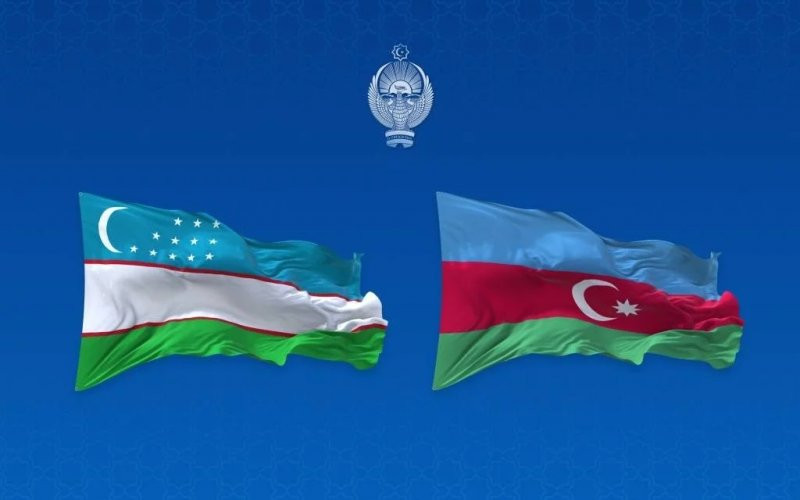
The elevation of Azerbaijan–Uzbekistan relations to the level of an alliance is more than the culmination of increasingly close bilateral ties. It reflects a broader geopolitical transformation taking place across the Caspian basin, where Central Asia and the South Caucasus are becoming increasingly interconnected through politics, trade, transport, energy and shared strategic interests.
Azerbaijan and Uzbekistan are among the states in the wider region that have consistently emphasized sovereignty, strategic autonomy and mutually beneficial cooperation in their foreign policies. The Treaty on Allied Relations signed in 2024 therefore did not create the partnership from scratch. Rather, it formalized a level of political trust that had already emerged through years of intensive dialogue, presidential diplomacy and expanding institutional cooperation.
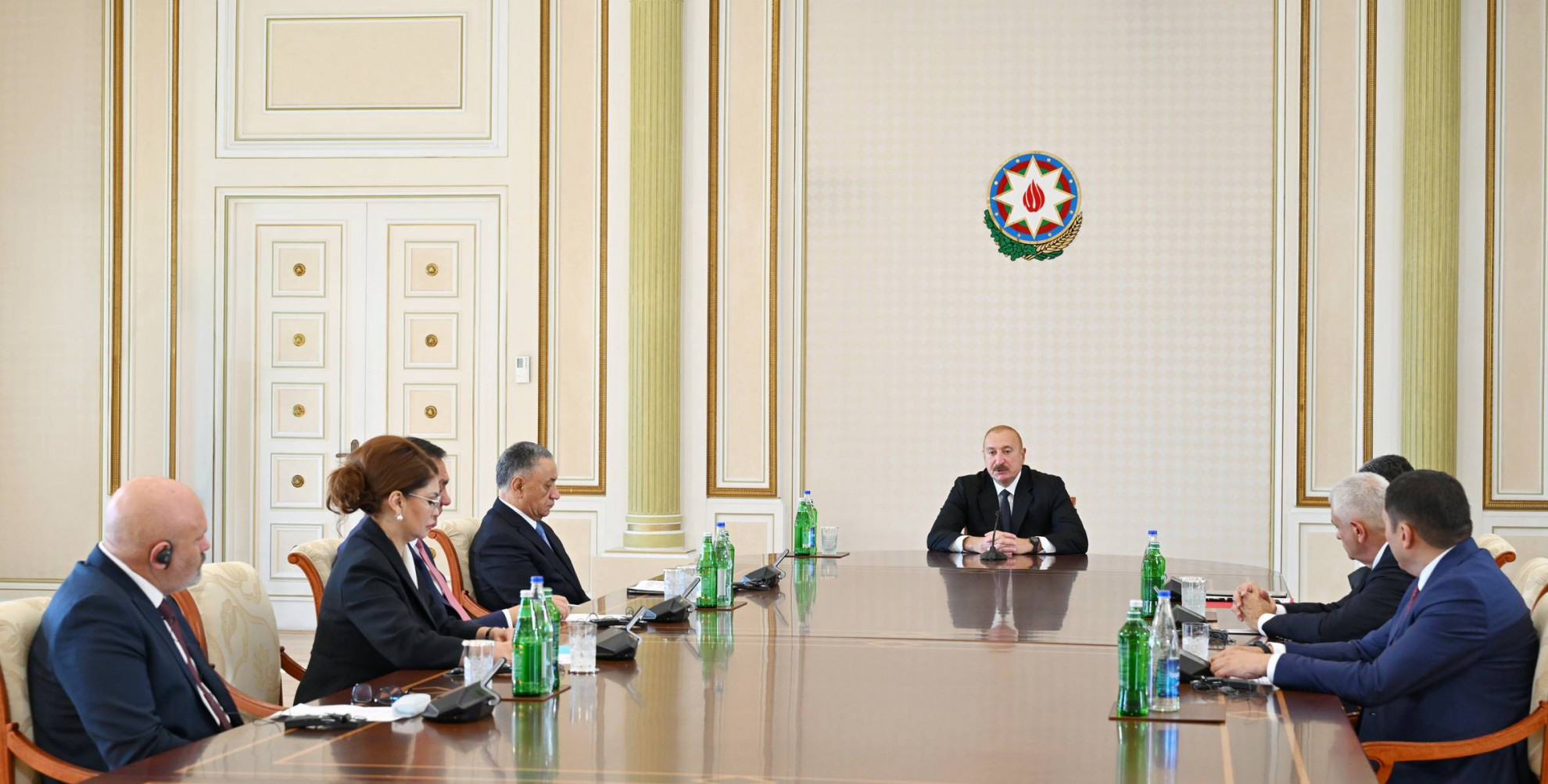
As President Ilham Aliyev stressed in his recent interview with Uzbekistan’s National Information Agency, relations between Baku and Tashkent have entered an unprecedented stage of development and acquired “completely new substance.” That assessment is important because the alliance is increasingly becoming not only political, but functional.
The geopolitical significance of this process extends well beyond the bilateral agenda. Uzbekistan is one of Central Asia’s pivotal states in demographic, economic and political terms, while Azerbaijan occupies a strategic position connecting Central Asia across the Caspian Sea with the South Caucasus, Türkiye and ultimately Europe.
This geography gives the Baku–Tashkent relationship a wider strategic purpose. The stronger their partnership becomes, the more effectively the eastern and western shores of the Caspian can be integrated into a common economic and connectivity space.
In this sense, the Caspian is increasingly ceasing to be perceived as a geographical divide. It is becoming a bridge.
This transformation can already be seen in Azerbaijan’s rapidly expanding relationship with Central Asia as a whole. The Organization of Turkic States (OTS), the Middle Corridor and Azerbaijan’s participation in the consultative mechanism of Central Asian leaders are different elements of the same process: the gradual emergence of a broader Azerbaijan–Central Asia strategic space.
The durability of any political alliance ultimately depends on whether it can develop a meaningful economic foundation. Azerbaijan and Uzbekistan appear to understand this well.
According to figures cited by President Aliyev, bilateral trade turnover increased more than threefold in 2025, reaching $795 million. In January–May 2026, trade grew by another 33 percent compared with the same period of the previous year.
These numbers are significant, but the more important development is qualitative rather than quantitative. Baku and Tashkent are moving beyond a model based predominantly on the exchange of goods toward one centered on investment, joint production, industrial cooperation, energy and logistics.
The Azerbaijan–Uzbekistan Investment Company, established with capital of $500 million, could become one of the principal instruments of this transition.
The next logical step should therefore be to move from simply increasing bilateral trade toward creating integrated production chains. Joint enterprises capable of supplying not only Azerbaijani and Uzbek markets but also third countries would give the alliance an economic depth that conventional trade alone cannot provide.
Automotive production, agriculture, tourism, petrochemicals, textiles, pharmaceuticals, construction materials and logistics all offer opportunities for such cooperation.
The strategic objective should not simply be to reach a particular trade figure. It should be to create an economic relationship in which both countries become increasingly important to each other’s development strategies.
Energy cooperation adds another dimension to this emerging architecture.
Historically, the Caspian has been associated primarily with oil and natural gas. But the next phase could increasingly be defined by electricity and renewable energy.
The creation of the Green Corridor Alliance by Azerbaijan, Kazakhstan and Uzbekistan in 2025 points precisely in this direction. The longer-term objective is ambitious: renewable electricity generated in Central Asia could eventually move westward across the Caspian through Azerbaijan and onward toward European markets.
For Uzbekistan, with its substantial solar and wind potential, this would provide additional export opportunities and greater diversification. For Azerbaijan, it could significantly expand an already important role in Eurasian energy security.
Azerbaijan would no longer function only as an oil and gas producer and exporter. It could simultaneously become a transit hub linking Central Asian renewable electricity with European consumers.
There is a striking strategic parallel here. The Middle Corridor seeks to connect Central Asia with Western markets through Azerbaijan in the transport sector; a trans-Caspian green energy corridor could eventually perform a comparable function in the energy sector.
Transport routes and electricity networks would therefore begin to reinforce the same geopolitical geography.
If successful, this could gradually transform the Caspian basin from a traditional hydrocarbon-producing region into a multidimensional East–West energy and connectivity hub.
Transport is perhaps where the strategic convergence between Azerbaijan and Uzbekistan becomes most visible.
The China–Kyrgyzstan–Uzbekistan railway could significantly alter the movement of goods between China and Central Asia. But its broader geopolitical value will depend on what happens after cargo reaches Uzbekistan.
This is where Azerbaijan becomes indispensable.
The integration of the China–Kyrgyzstan–Uzbekistan railway with the Middle Corridor could create a more diversified chain stretching from China through Central Asia and the Caspian to Azerbaijan, Georgia, Türkiye and Europe.
President Aliyev has specifically highlighted the potential integration of the railway with the Middle Corridor and TRIPP. Such connectivity would strengthen Azerbaijan’s position within East–West trade while giving Central Asian economies additional routes to global markets.
The Port of Baku at Alat, the Baku–Tbilisi–Kars railway and Azerbaijan’s expanding logistics infrastructure already provide the western Caspian with the foundations of a major transit hub.
TRIPP could add another dimension by creating an additional route through Nakhchivan toward Türkiye.
The significance of such diversification should not be underestimated. A successful transport corridor is not merely the shortest line between two points. It must also be resilient, commercially viable and capable of offering alternative branches when disruptions occur elsewhere.
TRIPP would therefore not necessarily diminish the importance of existing routes through Georgia. Instead, it could increase the overall flexibility and capacity of the Middle Corridor.
This is where Azerbaijan’s role begins to evolve from that of a transit state into something considerably more consequential: a regional logistics hub where multiple Eurasian transport arteries intersect.
Geopolitical partnerships can be created relatively quickly. Sustainable alliances require deeper social foundations.
Azerbaijan and Uzbekistan possess an important advantage in this regard. Their partnership rests not only on converging interests but also on linguistic, historical and cultural affinity.
Recent educational and cultural initiatives are therefore not secondary elements of the relationship. They are part of its strategic infrastructure.
The Mirzo Ulugbek school built in Fuzuli at Uzbekistan’s initiative is particularly symbolic. It represents Tashkent’s support for Azerbaijan’s post-conflict reconstruction while simultaneously creating a lasting cultural and educational connection between the two societies.
Student exchanges, cultural days, media cooperation, NGO forums and partnerships between cities reinforce the same process.
Such cooperation could be described as the “soft infrastructure” of the alliance.
Pipelines, railways and investment funds connect economies. Education, culture and people-to-people ties connect societies. A partnership possessing both is considerably more resilient than one built exclusively around temporary geopolitical calculations.
The deepening Azerbaijan–Uzbekistan relationship also has implications for the Organization of Turkic States.
The OTS is gradually facing a strategic choice over its future character. It can remain predominantly a platform for political dialogue and cultural solidarity, or it can evolve into an increasingly interconnected economic, transport and energy space.
Baku and Tashkent can help accelerate the second trajectory.
Both countries are actively involved in the sectors that will determine whether Turkic integration develops practical substance: transport, energy, investment, digitalization, trade facilitation and green technologies.
The Middle Corridor is particularly important in this respect because it physically connects several Turkic states. Green energy cooperation could add another layer of integration, while industrial partnerships and investment mechanisms could gradually create deeper economic interdependence.
This means Azerbaijan–Uzbekistan cooperation can serve as a bridge between bilateral alliance-building and broader multilateral integration.
The success of the OTS will ultimately be measured not by the number of declarations it adopts, but by whether goods, capital, energy, technology and people can move more efficiently across the Turkic space.
The Baku–Tashkent partnership has the potential to become one of the engines driving that transition.
Perhaps the most consequential development, however, is Azerbaijan’s full participation in the Consultative Meetings of the Heads of State of Central Asia.
Describing this simply as the transformation of “C5” into “C6” risks missing its larger meaning.
Azerbaijan is the first state outside geographical Central Asia to become fully integrated into this format. This suggests that the region itself is increasingly being defined not exclusively by physical geography but by connectivity, shared interests and strategic interdependence.
President Aliyev has described Azerbaijan and the Central Asian countries as increasingly forming a single geopolitical and geoeconomic space. Developments on the ground increasingly support this argument.
The Caspian connects rather than separates them. The Middle Corridor links their economies. Energy projects connect their infrastructure. Turkic institutions reinforce political and cultural ties. Investment and industrial cooperation add commercial substance.
The result is an emerging macro-region stretching from Central Asia across the Caspian into the South Caucasus.
This also carries implications for strategic autonomy.
Greater internal connectivity gives Azerbaijan and Central Asian states more options in their relations with major powers. Diversified transport routes reduce dependence on any single corridor. Alternative energy export channels widen economic choices. Stronger regional coordination increases diplomatic weight.
The importance of the emerging C6 framework therefore lies not in adding one more chair to a diplomatic table. It lies in institutionalizing a geopolitical reality that has been developing for several years.
The Azerbaijan–Uzbekistan alliance should ultimately be viewed through this wider lens.
Its bilateral foundations are strong: political trust, growing trade, investment, industrial cooperation and deep cultural ties. Yet its greatest strategic importance may lie in what it enables beyond the bilateral relationship.
Baku and Tashkent sit at crucial points along an emerging Eurasian axis linking China, Central Asia, the Caspian, the South Caucasus, Türkiye and Europe.
Transport corridors are being developed along this geography. New energy connections are being planned across it. Political institutions are increasingly adapting to it.
The Azerbaijan–Uzbekistan alliance is therefore becoming one of the building blocks of a broader transformation: the gradual integration of Central Asia and the South Caucasus into a more connected geopolitical and geoeconomic space.
If this momentum is sustained, the most important legacy of the Baku–Tashkent partnership may not simply be stronger relations between Azerbaijan and Uzbekistan.
It may be the emergence of a new strategic architecture across the heart of Eurasia.
https://news.az/news/beyond-alliance-how-baku-and-tashkent-are-reshaping-eurasian-connectivity